
 English
 中文简体
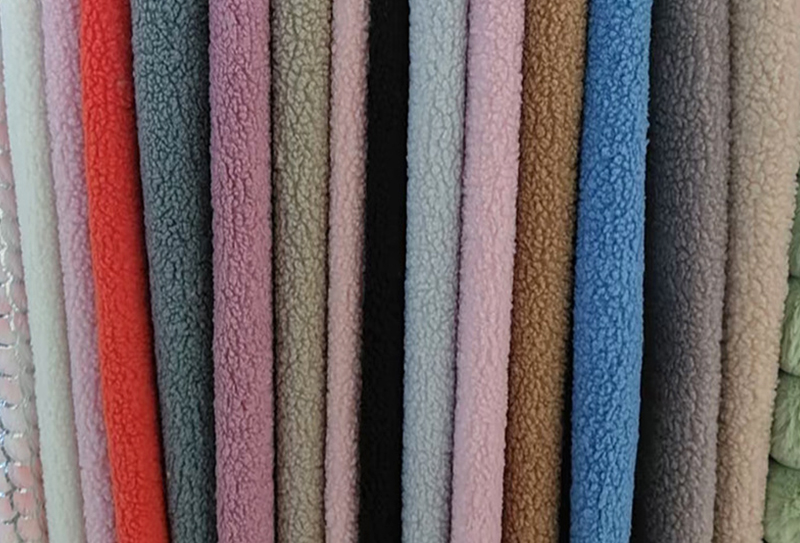
中文简体This 500mg*160cm Altai curly grain fabric utilizes a special post-fleeting process to create a three-dimensional Altai-style curly grain texture. The 500g/m2 weight ensures the fabric remains soft and...
See DetailsParticle Fabric: A Technical Deep Dive into Engineered Performance Materials
Content
- 1 Introduction: Redefining the Material Paradigm
- 2 Part 1: Core Technology and Market Positioning
- 3 Part 2: In-Depth Analysis of Key Properties and Applications
- 3.1 2.1 Breathable Waterproof Particle Fabric: The Science of Climate Control
- 3.2 2.2 Custom Printed Particle Fabric: Merging Aesthetics with Texture
- 3.3 2.3 Eco-Friendly Recycled Particle Fabric: The Sustainable Engineered Material
- 3.4 2.4 Abrasion-Resistant Particle Fabric for Backpacks: Engineering for Extreme Duty
- 3.5 2.5 Sound-Absorbing Particle Fabric Panels: Acoustic Performance Through Material Design
- 4 Part 3: Specification and Procurement Guidelines
- 5 Part 4: Future Outlook and Conclusion
- 6 Frequently Asked Questions (FAQs)
- 6.1 1. How does the durability of Particle Fabric compare to traditionally coated fabrics in real-world applications?
- 6.2 2. Can Particle Fabric truly be both highly waterproof and breathable? What are the limits?
- 6.3 3. What are the primary considerations for printing on custom printed Particle Fabric?
- 6.4 4. How is the recycled content in eco-friendly recycled Particle Fabric verified and quantified?
- 6.5 5. For architectural use, how do sound-absorbing Particle Fabric panels compare to traditional acoustic foams?
Introduction: Redefining the Material Paradigm
In the world of advanced textiles and composite materials, Particle Fabric represents a significant evolution beyond conventional coated or laminated fabrics. This engineered material is characterized by the permanent integration of functional micro-particles—such as ceramics, polymers, or recycled composites—into a substrate matrix through specialized processes. The result is not merely a surface treatment but a homogeneous functional composite where performance properties are intrinsic to the material's core structure. For engineers, designers, and procurement specialists, understanding this distinction is critical. While traditional fabrics may have a functional coating applied topically, Particle Fabric achieves its durability and specialized capabilities through a fundamental material fusion, leading to superior longevity and consistent performance under stress.
Part 1: Core Technology and Market Positioning
The technical superiority of Particle Fabric stems from its multi-layer composite architecture. At its core is a high-strength base substrate (woven, knitted, or non-woven). A specialized binder layer is then applied, which acts as a matrix for the precise embedding of engineered particles. These particles are selected based on target functionality: hard ceramics for abrasion resistance, hydrophobic polymers for water repellency, or porous materials for acoustic management. This creates a monolithic structure where the functional elements cannot delaminate or wear off independently, a common failure point in coated textiles.
1.1 Addressing Market Needs with Engineered Solutions
The development of Particle Fabric is a direct response to evolving demands across industries for materials that offer multifunctionality without compromise. The trend towards lightweight, durable, and sustainable solutions in sectors like outdoor gear, technical apparel, contract furniture, and architectural interiors has created a clear niche. Particle Fabric fills this niche by providing a single material answer to complex problems—such as the need for breathable waterproof Particle Fabric in performance outerwear or sound-absorbing Particle Fabric panels for modern workspaces—that previously required layering or combining multiple materials.
Part 2: In-Depth Analysis of Key Properties and Applications
2.1 Breathable Waterproof Particle Fabric: The Science of Climate Control
The achievement of simultaneous waterproofing and breathability in Particle Fabric is a feat of pore structure engineering. Unlike monolithic films that block all moisture, these fabrics utilize a micro-porous membrane or a densely packed particle layer with precisely calibrated interstitial spaces. These pores are smaller than the diameter of a water droplet (approx. 100 microns) but larger than a water vapor molecule (0.0004 microns). This allows perspiration vapor to escape while preventing liquid water from ingress. For procurement teams, the key performance indicators are the hydrostatic head (HH) for waterproofness and the Moisture Vapor Transmission Rate (MVTR) or Ret (Resistance to Evaporative Heat Transfer) for breathability.
When comparing breathable waterproof Particle Fabric to traditional solutions, the advantages in durability and consistent performance become clear. A standard polyurethane (PU) coating provides initial waterproofness but can micro-crack with repeated flexing, compromising the barrier. In contrast, the integrated particle matrix in Particle Fabric maintains its micro-porous structure even under dynamic stress, ensuring long-term reliability. The following table summarizes this critical differentiation:
| Performance Aspect | Traditional PU-Coated Fabric | Engineered Breathable Waterproof Particle Fabric |
|---|---|---|
| Waterproofness Mechanism | Continuous polymer film blocking pores. | Micro-porous structure repelling liquid water via surface tension and pore size. |
| Durability of Waterproofing | Susceptible to cracking and peeling over time, leading to failure. | Integrated particle structure resists delamination; performance is inherent to the material. |
| Maintenance of Breathability | Can be compromised as the coating degrades or pores become clogged with dirt. | Porous structure is more resilient to contamination and maintains consistent MVTR. |
| Ideal Application Scope | Cost-sensitive applications with lower durability requirements. | High-performance outdoor apparel, expedition-grade tents, and durable outdoor furniture where long-term warranty is key. |
2.2 Custom Printed Particle Fabric: Merging Aesthetics with Texture
The demand for custom printed Particle Fabric highlights its role in brand differentiation and sensory design. Printing on a textured particle surface requires advanced techniques like high-precision rotary screen printing or sublimation transfer, which must account for surface topography to ensure color fidelity and sharpness. This capability transforms the material from a purely technical component into a canvas for creative expression, suitable for high-visibility applications like designer luggage, architectural feature walls, and branded corporate interiors.
2.3 Eco-Friendly Recycled Particle Fabric: The Sustainable Engineered Material
Sustainability is no longer a niche preference but a core specification in material sourcing. Eco-friendly recycled Particle Fabric addresses this by incorporating post-consumer recycled (PCR) content, such as polyester from plastic bottles, into both the substrate and the functional particles. The material's integrity is verified through international standards like the Global Recycled Standard (GRS). For B2B purchasers, this provides quantifiable data for sustainability reporting and aligns with corporate ESG (Environmental, Social, and Governance) goals, making it a viable choice for product lines marketed on their environmental credentials.
Recent industry movements underscore this shift. According to a 2024 market analysis by the Textile Exchange, the demand for recycled content fibers in performance textiles is projected to grow at a compound annual rate exceeding 15% through 2027, driven by both brand commitments and evolving regulations. This positions materials like eco-friendly recycled Particle Fabric at the forefront of responsible sourcing.
Source: Textile Exchange - Preferred Fiber & Materials Market Report 2024 - https://textileexchange.org/knowledge-center/reports/preferred-fiber-and-materials-market-report-2024/
2.4 Abrasion-Resistant Particle Fabric for Backpacks: Engineering for Extreme Duty
In applications like tactical gear, industrial packs, and high-mileage travel luggage, abrasion-resistant Particle Fabric is selected for its exceptional durability. The key is the integration of ultra-hard particles like silicon carbide or alumina into the surface layer, dramatically increasing the fabric's resistance to scuffing and wear. Performance is rigorously measured using standardized tests like the Martindale or Taber Abraser tests, with results often expressed in cycles to fabric breakdown.
For a procurement officer comparing materials for a heavy-duty backpack contract, the choice between a standard high-denier nylon and an abrasion-resistant Particle Fabric boils down to total cost of ownership and product lifecycle. While the initial cost of the Particle Fabric may be higher, its extended service life can reduce warranty claims and replacement costs, offering a better long-term value proposition. The data-driven comparison is essential:
| Evaluation Criteria | 1000D Nylon Packcloth (Standard) | Abrasion-Resistant Particle Fabric Alternative |
|---|---|---|
| Primary Abrasion Resistance | Good; relies on thick fiber bundles. | Excellent; hard particle surface resists cutting and fraying at the filament level. |
| Test Data (Taber Abraser, H-18 wheel) | Approx. 2,000-4,000 cycles to failure. | Can exceed 10,000+ cycles to failure, depending on particle density and hardness. |
| Failure Mode | Fibers gradually fray and break, leading to thinning and hole formation. | Particle wear is gradual; the underlying substrate remains protected for a longer period. |
| Impact on Product Lifespan | Suitable for moderate use; may show significant wear within 1-2 years of heavy-duty use. | Designed for extended heavy-duty use, potentially doubling or tripling the product's functional lifespan. |
2.5 Sound-Absorbing Particle Fabric Panels: Acoustic Performance Through Material Design
In architectural and interior design, sound-absorbing Particle Fabric panels solve the dual challenge of noise control and aesthetics. The acoustic efficiency, measured by the Noise Reduction Coefficient (NRC), is achieved through a combination of porous absorption (sound energy converted to heat within the material's void spaces) and resonant damping. The embedded particles and the fabric's surface texture help to diffuse sound waves, reducing echo and reverberation. These panels are often used in open-plan offices, restaurants, auditoriums, and recording studios, where they provide a softer, more fabric-like aesthetic compared to rigid perforated acoustic tiles, without sacrificing performance.
Part 3: Specification and Procurement Guidelines
Selecting the correct Particle Fabric requires a systematic approach based on application-driven specifications. The following matrix serves as a foundational guide for technical procurement discussions:
| Primary Application Requirement | Critical Performance Metrics to Specify | Key Tests & Standards (Examples) |
|---|---|---|
| Outdoor/All-Weather Exposure (e.g., for breathable waterproof Particle Fabric) | Hydrostatic Head (≥10,000 mm), MVTR (≥10,000 g/m²/24h), UV Resistance (Hours to Xenon Arc Fading). | ISO 811, ISO 15496, AATCC TM16 or ISO 105-B02. |
| High-Abrasion Applications (e.g., for abrasion-resistant Particle Fabric for backpacks) | Martindale Abrasion Cycles (≥40,000 for heavy duty), Tear Strength (Warp/Weft). | ASTM D4966, ISO 12947-2, ASTM D5587. |
| Sustainable Product Lines (e.g., for eco-friendly recycled Particle Fabric) | Recycled Content Percentage (by mass), Chain of Custody Certification. | Global Recycled Standard (GRS), SCS Recycled Content Certification. |
| Architectural Acoustic Management (e.g., for sound-absorbing Particle Fabric panels) | Noise Reduction Coefficient (NRC @ 250-2000Hz), Flame Spread Classification. | ASTM C423, ASTM E84 (UL 723). |
| Branded/Aesthetic Applications (e.g., for custom printed Particle Fabric) | Color Fastness to Light & Crocking, Print Precision and Resolution. | AATCC TM16, AATCC TM8, ISO 105-B02. |
3.1 Essential Questions for Your Particle Fabric Supplier
- Can you provide third-party certified test reports for the specific performance metrics I require (e.g., HH, MVTR, abrasion)?
- What is the bonding mechanism between the particles and the substrate, and what is its tested resistance to delamination (e.g., peel strength test)?
- For eco-friendly recycled Particle Fabric, what is the exact percentage of PCR content, and can you provide the GRS or equivalent certification with transaction certificate (TC) capability?
- What are the minimum order quantities (MOQs) for standard and custom printed Particle Fabric options, and what is the lead time for development and production?
- How does the material behave in relevant flammability tests (e.g., NFPA 701, ASTM E84), and are there specific cleaning or maintenance protocols to preserve its functionality?
Part 4: Future Outlook and Conclusion
The trajectory for Particle Fabric points toward increased intelligence and multifunctionality. Research is actively exploring the integration of phase-change materials (PCMs) for dynamic thermal regulation, and the development of "smart" particles that could react to environmental stimuli such as temperature or moisture. Furthermore, advancements in material science are making eco-friendly recycled Particle Fabric options not just equivalent but potentially superior in performance to their virgin counterparts.
In conclusion, Particle Fabric is not a single product but a versatile and engineered material platform. From breathable waterproof shells to durable abrasion-resistant packs, from custom printed interior solutions to sound-absorbing panels and verified eco-friendly recycled content, it offers targeted, high-performance solutions. For B2B decision-makers, success lies in moving beyond generic material descriptions and engaging in precise, specification-driven dialogue with technical suppliers to unlock the full potential of this advanced material class.
Frequently Asked Questions (FAQs)
1. How does the durability of Particle Fabric compare to traditionally coated fabrics in real-world applications?
The core advantage is resistance to delamination and functional degradation. In a coated fabric, the functional layer is a separate laminate that can peel, crack, or wear off. In Particle Fabric, the functionality is embedded within the material matrix. This means an abrasion-resistant Particle Fabric will gradually wear at the particle level while maintaining integrity, whereas a coated fabric may fail catastrophically once the top coating is breached.
2. Can Particle Fabric truly be both highly waterproof and breathable? What are the limits?
Yes, through micro-porous or hydrophilic membrane technologies integrated into the fabric construction. The limit is defined by the laws of physics governing vapor diffusion and hydrostatic pressure. Extreme waterproofness (e.g., >20,000 mm HH) often involves denser membranes that can slightly reduce breathability (MVTR). High-end breathable waterproof Particle Fabric optimizes this balance, but it cannot achieve the maximum theoretical values of both properties simultaneously. The application's specific climate and activity level should guide the specification.
3. What are the primary considerations for printing on custom printed Particle Fabric?
The textured surface is the main consideration. Printing techniques must be adapted to ensure ink adhesion and color penetration into the valleys of the texture. Sublimation printing is excellent for polyester-based substrates as it dyes the fiber itself, making the design resistant to surface wear. For other materials, advanced rotary screen printing with adjusted ink viscosity is used. A detailed strike-off sample is essential to evaluate color matching, detail sharpness, and hand feel before full production.
4. How is the recycled content in eco-friendly recycled Particle Fabric verified and quantified?
Verification is achieved through independent, audited certification standards like the Global Recycled Standard (GRS) or the Recycled Claim Standard (RCS). These standards require a Chain of Custody model that tracks the recycled material from its source (e.g., post-consumer waste) through all stages of production. A reputable supplier should be able to provide a valid certificate and, for each order/batch, a Transaction Certificate (TC) that documents the exact percentage of certified recycled content in the final product.
5. For architectural use, how do sound-absorbing Particle Fabric panels compare to traditional acoustic foams?
They offer a superior aesthetic and often better durability. Traditional acoustic foams (like melamine or polyurethane) are highly effective but are typically soft, friable, and require a protective fabric cover, adding complexity. Sound-absorbing Particle Fabric panels integrate the acoustic medium (often a porous substrate like felt or non-woven) with a durable, decorative, and cleanable textured surface in one consolidated product. Their performance (NRC) can be comparable to mid-range foams, but their key value is in combining sound management with specified design finishes, making them ideal for visible spaces.
Hot News
-
-
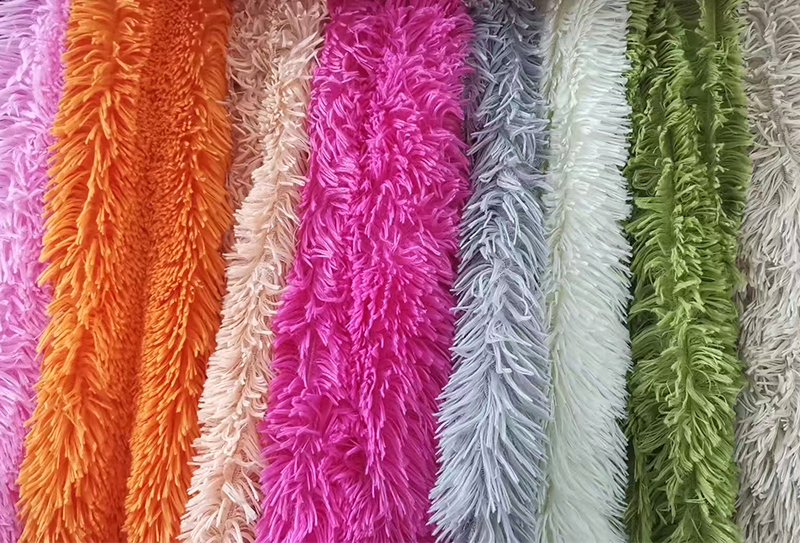
This 290gsm*165cm Haipai velvet fabric is easy to care for and 30mm thick, making it suitable for clothing, toys, pet beds, blankets, and other decorative applications. Its excellent wear resistance a...
See Details -
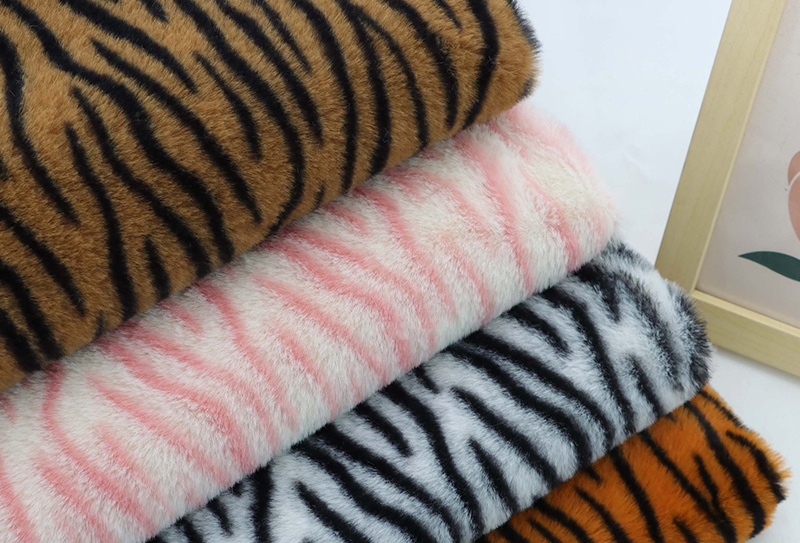
500g/160cm tiger-print rabbit fur print plush fabric uses printing technology to realistically present the wild stripes of tiger stripes on a high-quality imitation rabbit fur base fabric. The medium-...
See Details -
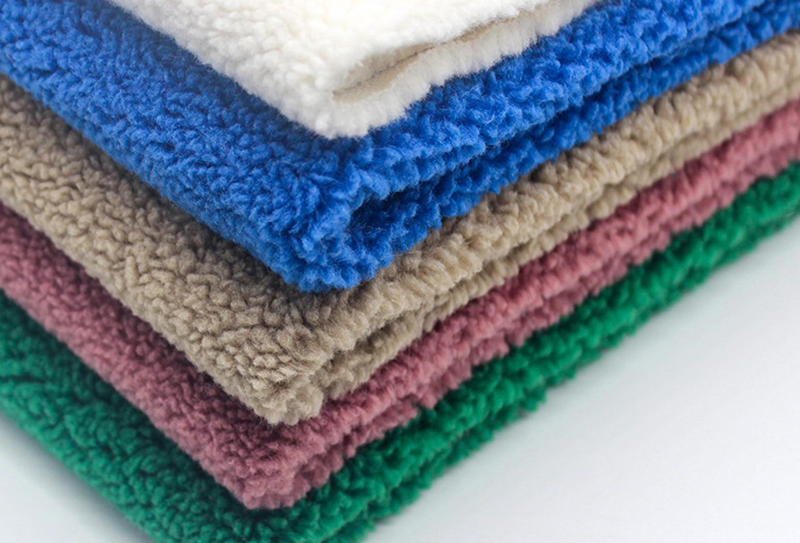
This 750mg*160cm wheat-ear grain plush fabric uses a dyeing process to create a natural, smooth, three-dimensional grain texture resembling wheat ears. The medium-heavy weight of 750g/m2 imparts the f...
See Details -
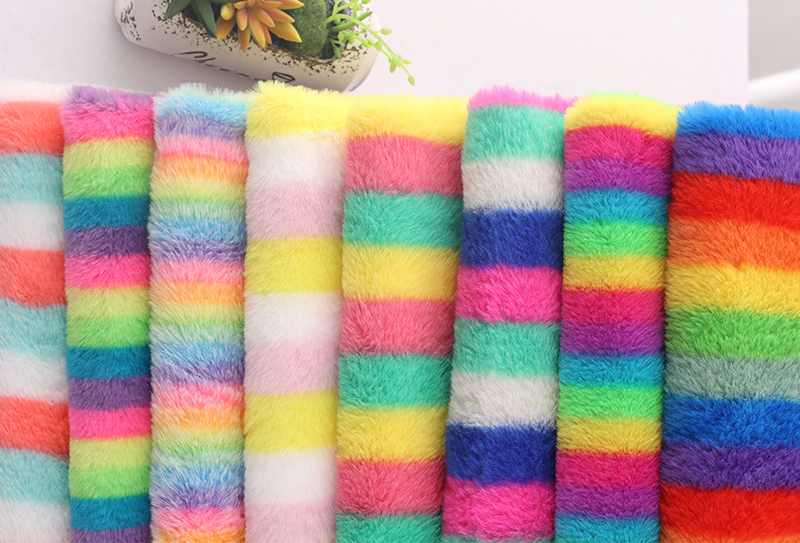
This 500mg*160cm colorful striped rabbit fur print plush fabric features a vibrant, colorful striped pattern on the imitation rabbit fur surface. Its moderate weight of 500g/m2 ensures softness and vo...
See Details -
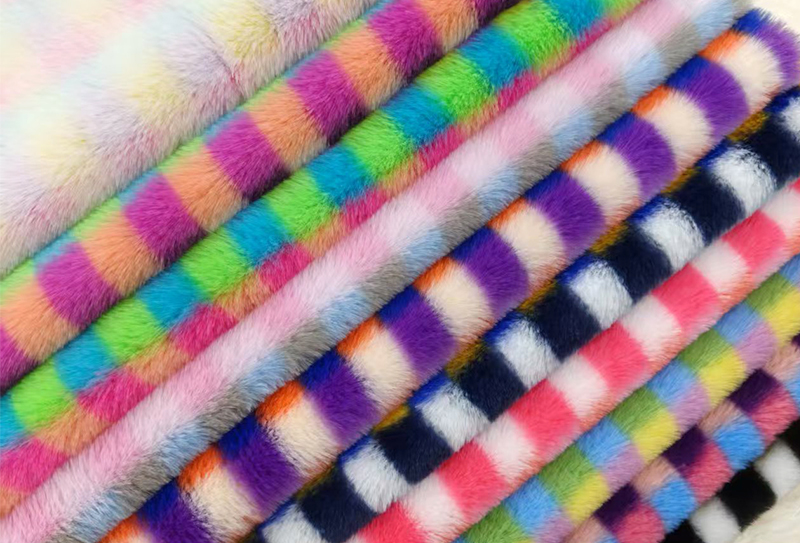
This 500mg*160cm checkered rabbit fur print plush fabric utilizes printing technology to create a clear, rich checkered pattern on the imitation rabbit fur surface. The medium weight of 500g/m ensures...
See Details
Contact us
 1027, Floor 1, Zone 1, Beilian Market, China Textile City, Keqiao District, Shaoxing City, Zhejiang Province, China
 +86-159 8821 9333

Copyright © Shaoxing Wanyi Textile Co., Ltd. All Rights Reserved
Custom Soft Faux Fur Fabric, Sherpa Fleece Material Manufacturers
