
 English
 中文简体
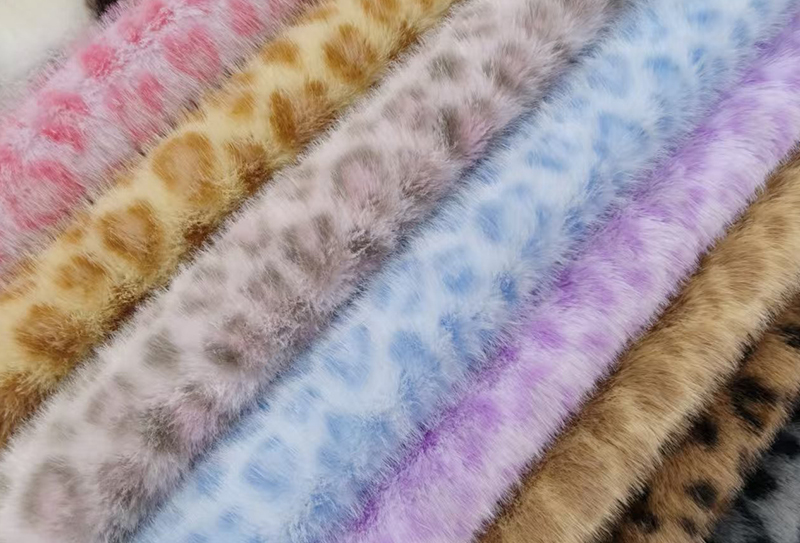
The 700g/170cm mink print leopard plush fabric uses an innovative printing process to create a wild leopard pattern on a mink-like base fabric through high-definition digital printing. The high weight...
See DetailsCurly Particles Plush vs Small Particles Plush: Texture & Elasticity Guide
Content
- 1 What Are Curly Particles Plush and Small Particles Plush?
- 2 Texture: Springy Volume vs Dense Smoothness
- 3 Elasticity and Recovery: How the Fabrics Respond
- 4 Application Differences: Choosing the Right Fabric for Each End Use
- 5 How to Choose Between Curly and Small Particles Plush
- 6 Frequently Asked Questions
When sourcing plush fabrics for toys, home textiles, or garments, the choice between curly particles plush and small particles plush affects far more than surface appearance. Texture, elasticity, cutting behavior, and end-product performance all shift depending on which pile geometry you select. Both fabrics belong to the particle plush family and share a polyester base, yet the way their loops are formed leads to distinctly different tactile profiles. This guide compares curly and small particles plush across the attributes that matter most to fabric buyers, product developers, and factory owners, with practical recommendations for each scenario.
Curly Particles Plush
Bouncy, sculptural, voluminous
Small Particles Plush
Smooth, dense, uniform
What Are Curly Particles Plush and Small Particles Plush?
Curly particles plush, also called curled grain plush, is produced from polyester yarns that are heat-set into loose wavy loops. During manufacturing, the yarn is fed at a controlled rate to a knitting process and then passed through a heat-setting stage that locks in the curl. The result is a deep, three-dimensional grain that looks airy and voluminous. Representative styles include double-sided teddy velvet, kara roll curly grain, and Altai curly grain. Pile height typically ranges from 8 to 20 mm, which gives the surface a sculptural character that is easy to identify by eye and by touch.
 Double-Sided Teddy Velvet Curly Grain Fabric, 500gsm, 160cm WideThis double-brushed, double-rolled polyester fabric features deep, heat-set wavy loops that create an airy, three-dimensional surface. Its 500g/m² weight balances loft with cutting ease, and anti-static and down-fixing treatments make it suitable for baby products, blankets, and apparel accessories.View Product →
Small particles plush is constructed from tightly packed micro-loops. Rather than tall curling piles, the fabric uses a dense arrangement of short loops, usually 2 to 6 mm high, to create a surface that is smooth, even, and visually uniform. Arctic velvet and wheat-ear small particle fabrics are typical examples. Because the pile is short and compact, the fabric feels closer to velour or a fine short plush, and it reflects light more evenly than a loosely curled surface.
| Property | Curly Particles Plush | Small Particles Plush |
|---|---|---|
| Pile height | 8-20 mm | 2-6 mm |
| Surface structure | Loose wavy loops | Tight micro-loops |
| Visual grain | Pronounced and sculptural | Subtle and uniform |
| Typical weight | 400-800 gsm | 200-400 gsm |
Texture: Springy Volume vs Dense Smoothness
Curly particles plush: bouncy and warm
Running a hand across curly particles plush immediately reveals why it is favored for plush toys, cushions, and winter accessories. The loose coils compress under light pressure and spring back slowly, producing a bouncy, marshmallow-like hand feel. Because the open loop structure traps air between the fibers, the fabric also feels naturally warm. The irregular curly grain gives every batch a slight variation in pattern, and a light brush reveals wave lines that run along the fabric direction, adding depth that flat surfaces cannot replicate.
Small particles plush: silky and consistent
Small particles plush delivers a completely different tactile experience. The short, closely spaced loops feel velvety and smooth under the palm, with minimal rebound and no perceptible grain direction. This makes it an ideal substrate for embroidery, screen printing, and quilting, where a stable and consistent surface is essential. It also resists pilling and matting better than curly styles, because the loops are too short to tangle or fold under friction or repeated washing.
 Double-Sided Arctic Velvet Small-Particle Plush, 270gsm, 185cm WideWith short, densely packed micro-loops on both sides, this lightweight 270g/m² fabric offers a smooth, velvety feel and excellent print stability. Its extra-wide 185cm width maximizes fabric yield, while down-fixing treatment and Class A infant safety compliance suit baby sleeping bags and homewear.View Product →
Elasticity and Recovery: How the Fabrics Respond
Elasticity in particle plush fabrics comes from two distinct sources: the crimp of the polyester fiber itself and the loop geometry of the pile. Curly particles plush benefits from both simultaneously. The wavy loops behave like micro-springs that store mechanical energy during compression and release it as the fabric returns to its original shape. In practical terms, a cushion made from curly particles plush keeps its plump appearance after pressure is removed. However, the springs are not indestructible: repeated heavy compression, especially in low-density constructions, can gradually flatten the curls and reduce the fabric's loft.
Small particles plush cannot match that rebound behavior. Its short loops are too compact to store meaningful mechanical energy, so recovery after deep compression is slower and less visible. What it loses in bounce, it gains in dimensional stability. The dense structure keeps the fabric flat and true to its original shape during cutting, sewing, and everyday use. For factories running automated cutting machines, this stability reduces waste and simplifies alignment, because the fabric does not shift or stretch during handling.
Elasticity also influences drape, which is critical in apparel and accessories. Curly particles plush drapes with soft fullness because the standing pile pushes the fabric away from the base cloth, creating a lifted silhouette. Small particles plush sits closer to the substrate, producing a flatter, more structured line. This is why curly styles are common in loose outerwear and blanket-like garments, while small particle styles appear in fitted hats, collars, linings, and trims.
Quick reference: curly particles plush delivers volume and bounce; small particles plush delivers smoothness and stability.
Application Differences: Choosing the Right Fabric for Each End Use
| Application | Curly Particles Plush | Small Particles Plush |
|---|---|---|
| Plush toys | Excellent: volume, huggable | Suitable: smooth, neat finish |
| Cushions and pillows | Decorative deep texture | Clean uniform surface |
| Hats and winter accessories | Fluffy visual volume | Better for structured caps |
| Apparel | Voluminous outerwear | Lining, loungewear, trims |
| Home textiles | Throws, seat cushions | Bedding accents |
| Bags and accessories | Less common | Durable, neat appearance |
Curly particles plush is the natural choice when the product needs visual volume, warmth, and a soft, huggable surface. Plush toy manufacturers use curly grain for teddy-style animals and character toys, where the deep pile makes the product feel larger and friendlier. Home textile brands apply the same fabric to accent cushions, throws, and seat pads, because the sculptural surface brings texture to a room without additional printing or embroidery. As we explore in our guide on how curly particles plush enhances comfort and aesthetics in interior spaces, the wave structure adds a layer of depth that flat fabrics cannot match.
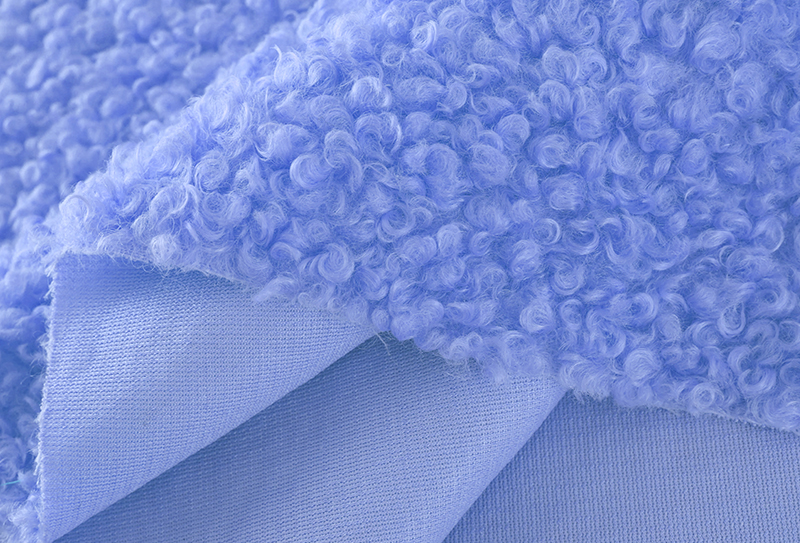 Kara Roll Curly Grain Fabric, 460gsm, 160cm WideThis medium-weight polyester plush uses a three-dimensional rolling process to produce a uniform, rich grain with lasting curl memory. Its 460g/m² weight provides softness and support, and anti-static, anti-linting properties make it a strong option for plush toys, home pillows, and pet products.View Product →
Small particles plush serves products that demand a smooth, uniform face. Pillow covers, baby accessories, and loungewear all benefit from the fabric's neat appearance and stable hand feel after repeated washing. The dense pile also makes it a dependable choice for linings, decorative trims, and bags, where a hint of plushness is desired without extra bulk. For products that combine printed patterns with plush texture, small particle styles hold print definition better because the short pile creates a flatter printing surface.
Need help matching specific pile sizes to your product line? Browse the particle fabric collection to compare pile structures side by side.
How to Choose Between Curly and Small Particles Plush
Use these decision criteria to shortlist the right fabric for your next production run:
- Visual priority: choose curly for deep sculptural grain; choose small for a clean, uniform surface.
- Tactile priority: choose curly for a bouncy, marshmallow feel; choose small for a silky, velvety touch.
- Production behavior: small particles plush cuts and sews more predictably due to its density.
- Care requirements: small particles plush resists matting better when products face frequent washing.
- Weight and cost: compare gsm and pile height against your target price point before ordering.
Start by defining the product's core requirements, because the right choice is always application-driven. If the end product is a plush toy, decorative cushion, or winter throw, curly particles plush delivers the volume and softness that drive perceived quality. If the product requires printing, embroidery, or structured shaping, small particles plush offers a more predictable working surface. Many manufacturers keep both in their material library and make the final call based on silhouette, filling method, and washing cycle. Ordering physical samples of each pile geometry before bulk production is the surest way to validate hand feel and performance.
Frequently Asked Questions
Q1: What is the main difference between curly and small particles plush?
The main difference is the pile geometry. Curly particles plush uses loose wavy loops with a pile height of roughly 8 to 20 mm, creating a bouncy, textured surface. Small particles plush uses tightly packed micro-loops of 2 to 6 mm, producing a smooth, dense surface.
Q2: Which fabric is more durable in daily use?
Small particles plush generally resists matting and deformation better because its short loops do not tangle or flatten easily. Curly particles plush recovers well from compression but may lose some curl definition after heavy repeated use, especially when the fabric has a low density.
Q3: Can both fabrics be used for children's plush toys?
Yes, both are used in plush toys when produced with quality polyester materials. Curly particles plush gives a huggable, voluminous body, while small particles plush provides a smoother, more uniform finish. The choice depends on the toy design, safety standards, and the intended tactile experience.
Q4: How should these fabrics be washed and cared for?
Use gentle machine washing in cold water and low-temperature drying for both fabrics. Avoid high heat, bleach, and strong agitation, which can permanently deform the loops and shorten the fabric's service life.
Hot News
-
-
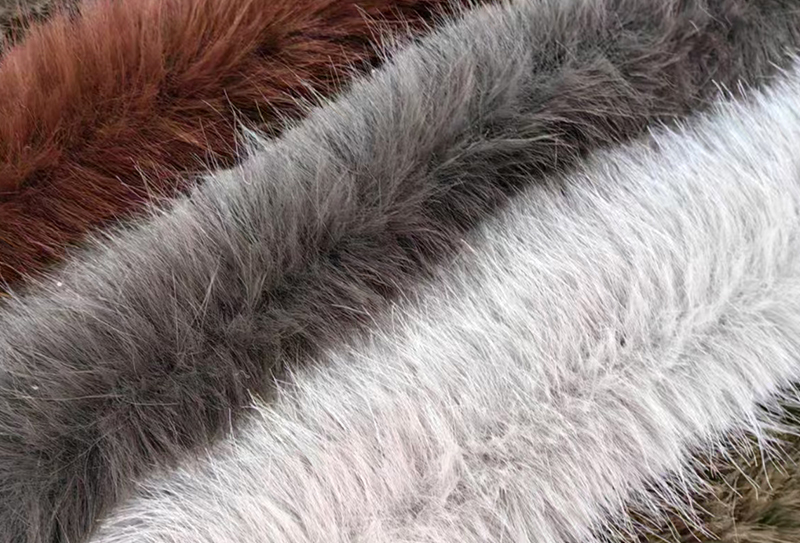
This 1100mg*185cm fox fur plush fabric utilizes a bionic short-pile process, with a down length of 5-8mm, creating a delicate, fox-like feel. The high 1100g/cm weight imparts excellent loft and warmth...
See Details -

This 900mg*160cm small cloud plush fabric with large particles uses a three-dimensional embossing process to create a full and fluffy, large-particle plush effect. The high 900g/m weight provides exce...
See Details -
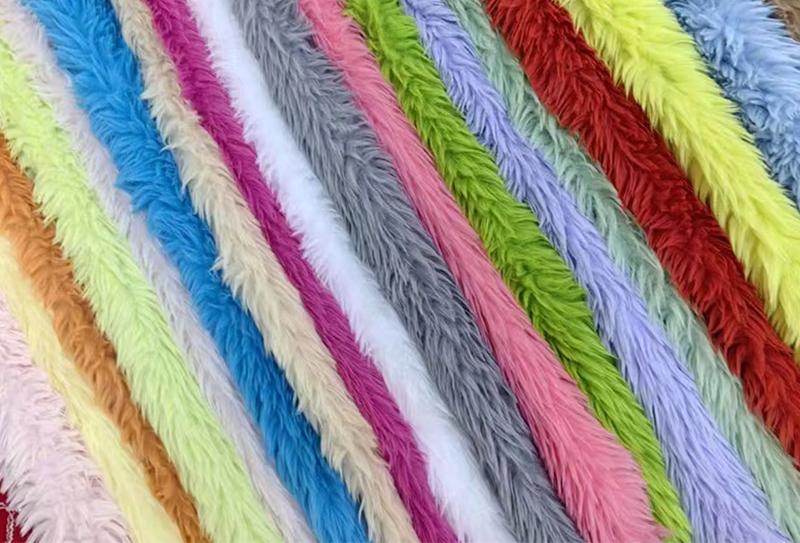
380gsm, 160cm, durable and wear-resistant Tosca plush fabric, suitable for toys, clothing, shoes, hats, and more. This fabric offers excellent wear resistance and durability, making it suitable for a ...
See Details -
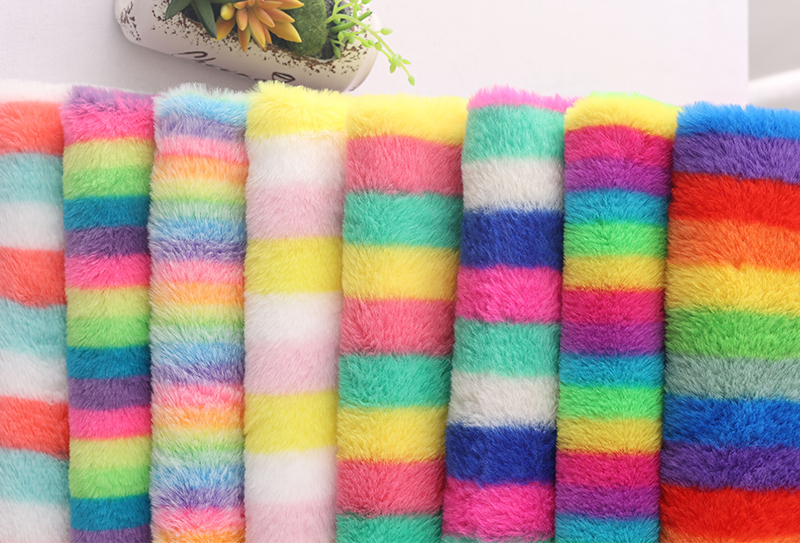
This 500mg*160cm colorful striped rabbit fur print plush fabric features a vibrant, colorful striped pattern on the imitation rabbit fur surface. Its moderate weight of 500g/m2 ensures softness and vo...
See Details -
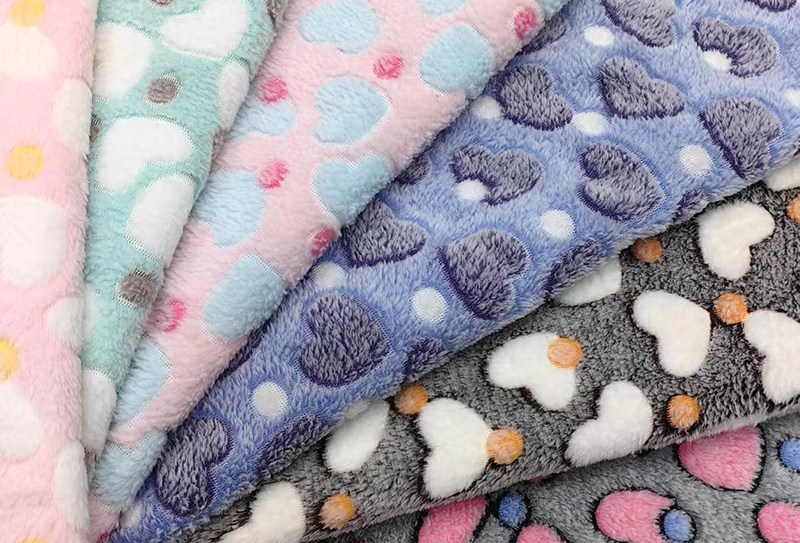
230g/160cm double-sided flannel three-dimensional printed plush fabric adopts innovative double-sided embossing technology to achieve a double-sided three-dimensional printing effect on a lightweight ...
See Details
Contact us
 1027, Floor 1, Zone 1, Beilian Market, China Textile City, Keqiao District, Shaoxing City, Zhejiang Province, China
 +86-159 8821 9333

Copyright © Shaoxing Wanyi Textile Co., Ltd. All Rights Reserved
Custom Soft Faux Fur Fabric, Sherpa Fleece Material Manufacturers
