
 English
 中文简体
This 290gsm*165cm Haipai velvet fabric is easy to care for and 30mm thick, making it suitable for clothing, toys, pet beds, blankets, and other decorative applications. Its excellent wear resistance a...
See DetailsDouble-Sided Teddy Curly Plush: Maximizing Thermal Retention for Reversible Jackets
Content
- 1 What Is Double-Sided Teddy Curly Plush?
- 2 How the Curly Pile Structure Supports Thermal Retention
- 3 Why Reversible Jackets Benefit from Double-Sided Warmth
- 4 Key Specifications That Determine Thermal Performance
- 5 Selecting and Sourcing for Production
- 6 Caring for Double-Sided Curly Plush Outerwear
- 7 FAQ
Double-sided teddy curly plush has grown from a novelty fabric into a serious performance material for cold-weather apparel. Its dense, curled pile on both faces gives reversible jackets a rare combination of soft hand feel, visual texture, and genuine thermal efficiency. For brands planning a reversible jacket program, understanding how the pile holds heat and which specifications matter separates a garment that looks warm from one that truly performs.
What Is Double-Sided Teddy Curly Plush?
Double-sided teddy curly plush is a pile fabric with raised, springy loops on both surfaces. Unlike conventional fleece, which is brushed on one face and leaves a flat backing, this construction develops a curled grain on both the exterior and the interior of the material. When a reversible jacket is turned inside out, the wearer still gets plush comfort instead of a smooth, cold liner.
The double-faced arrangement works like two insulation layers in one. Each curled loop traps a small pocket of air, and because the loops stand upright on both sides, the fabric captures significantly more air per square meter than a single-sided plush of the same weight. The result is an efficient thermal barrier that also feels extremely comfortable against the skin.
 Double-Sided Teddy Velvet Curly Grain Fabric, 500g/m², 160cm WideThis medium-weight double-faced teddy velvet traps air on both sides, making it an efficient thermal layer. Its curly pile suits baby products and blankets while remaining easy to cut.View Product →
How the Curly Pile Structure Supports Thermal Retention
Thermal retention in textiles depends largely on trapping still air. Air is a poor conductor of heat, so the more dead air space a fabric holds, the slower body heat escapes. The curly pile of teddy velvet is particularly effective at creating dead air space for three structural reasons:
- Pile height. The raised curls create a thick air layer between the body and the outer environment.
- Fiber density. Fine polyester fibers form micro air pockets, yet stay stiff enough to keep the curls from collapsing under outer layers.
- Double-sided geometry. With curls on both faces, heat must cross two insulated zones before escaping.
Polyester, the dominant fiber, supports warmth in two additional ways. Its low thermal conductivity does not quickly transfer heat away from the body, and its moisture resistance keeps the fiber from wetting out, preserving a dry microclimate inside the jacket.
Key principle: warmth in curly plush comes less from the fiber itself and more from the still air held between and inside the curled loops. Protecting that air layer is the core of thermal design.
Why Reversible Jackets Benefit from Double-Sided Warmth
A reversible jacket makes one garment do the work of two, but not every fabric can carry both faces. Single-sided faux fur and sherpa leave a flat backing that feels cold and looks unfinished when exposed. Double-sided teddy curly plush solves this by offering a warm, decorative face on both sides, fully wearable in either orientation.
Reversibility also extends the practical life of a garment. Wearers alternate between the two faces to change the look while distributing abrasion across both surfaces. In wet or rough conditions, the jacket can be reversed to place the more protective face outward. The curled texture hides light soiling, reducing washing frequency and preserving the pile.
For manufacturers, a double-sided fabric simplifies production. Because the fabric acts as the lining, there is no need to cut and sew a separate liner shell. That reduces sewing operations, lowers material consumption, and shortens lead times. The comfort and aesthetic benefits of curly particle plush are well documented in our guide to how curly particles plush enhances comfort and aesthetics, and those advantages carry directly into jacket construction.
Key Specifications That Determine Thermal Performance
Not every double-sided teddy curly plush performs the same in a winter garment. The table below summarizes the specifications that have the largest impact on heat retention, based on measurable parameters used across the industry.
| Specification | Typical Range | Why It Matters for Warmth |
| Fabric weight | 400-800mg per meter | Heavier pile traps more air per area |
| Finished width | 155-190cm | Determines cutting yield and panel layout |
| Curl size and grain | Fine to large curly grain | Curl geometry controls dead air volume |
| Fiber composition | 100% polyester | Low conductivity and moisture resistance |
| Pile density | Tight to loose spacing | Denser curls reduce internal air movement |
Weight and curl density are the two levers buyers adjust first. A fabric around 400mg with a fine curl suits transitional jackets and childrenswear, while a heavier 500-700mg construction with a pronounced curly grain provides the thicker air barrier needed for deep winter. The engineering behind these choices is covered in our technical deep dive into particle fabric, which explains how fiber geometry translates into performance.
For lightweight programs that still need double-sided warmth, a bright silk down curly velvet in the 400mg range offers a strong starting point for spring and autumn collections.
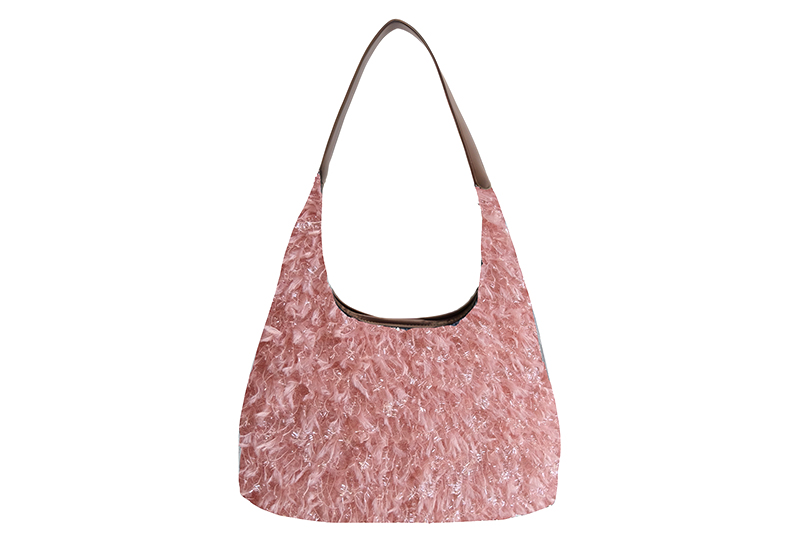 Bright Silk Down Curly Velvet Fabric, 400g/m², 155cm WideA lightweight shimmering curly velvet designed for bags, hats, and dolls. Its anti-deformation finish keeps the loft intact, offering a breathable option for spring and autumn accessories.View Product →
Selecting and Sourcing for Production
Choosing the right double-sided teddy curly plush begins with a clear picture of the target climate and season. For transitional weather, a 500mg/160cm double-sided teddy velvet with a tight curly grain balances warmth, drape, and lightness. When the jacket targets freezing temperatures, a loftier construction such as the 700mg Fair Isle cashmere curly grain adds trapped air without requiring a second inner layer.
 Fair Isle Cashmere Curly Grain Fabric, 700g/m², 160cm WideA heavier curly grain fabric with triple-fixing treatment for improved down retention. Ideal for Nordic throws, winter linings, and premium dolls where extra warmth and durability are needed.View Product →
400mg Lightweight transitional wear
500mg Balanced year-round warmth
700mg Deep winter insulation
Width is a direct cost driver. Standard widths around 155-160cm give efficient yields for most adult body panels, while wider rolls of 180-185cm reduce waste when cutting sleeves, hoods, and collars from a single spread. Confirming finished width before design work begins prevents costly marker adjustments.
Curl consistency deserves close attention during supplier evaluation. A uniform curl creates even coverage, while irregular curl leaves thin spots where heat can escape and the garment may look patchy. Request a folded sample showing both faces, and ask for curl density measurements, verified weight, and washing test results before bulk production.
Caring for Double-Sided Curly Plush Outerwear
The thermal performance of curly plush depends on keeping the pile springy. Machine washing on a cold, gentle cycle with reduced spin speed protects the curl geometry, while high heat can relax the polyester yarns and permanently flatten the loops. Air drying or low-heat tumble drying preserves loft.
Abrasion resistance is equally important for reversible jackets, because both faces are exposed. A tightly twisted curl anchored in a dense base weave sheds less fiber and resists pilling far better than a loose construction. Pre-production testing should include repeated industrial washes and a simple abrasion check, so the bulk order matches the sample standard.
FAQ
Q1: Is double-sided teddy curly plush warmer than single-sided plush?
Yes, in most cases. The curled pile on both faces creates two layers of trapped air, while a single-sided plush has a flat backing that conducts heat away more readily. The double-sided construction is more effective in freezing conditions, especially in reversible jackets.
Q2: What fabric weight should I choose for a winter reversible jacket?
A 500-700mg range offers the best balance of warmth and wearability for a standard winter jacket. Lighter weights around 400-460mg reduce bulk for mild winters, while heavier options above 700mg deliver maximum insulation for extreme cold.
Q3: Can double-sided curly plush be printed or finished after production?
Yes. The fabric can undergo printing, brush finishing, jacquard weaving, or embossing. Finishing processes can slightly alter the curl structure, so verify thermal performance on a finished sample before approving bulk production.
Q4: How do I prevent shedding in reversible jackets?
Shedding usually comes from poor fiber anchoring in the base structure. Work with a supplier that controls yarn twist and knitting density, then run a wash test on pre-production samples. A fabric that passes several industrial washes without significant fiber loss performs well.
Double-sided teddy curly plush gives reversible jackets a credible answer to the most important winter question: will it keep the wearer warm? By trapping still air on both faces, offering a soft and durable surface in either direction, and simplifying manufacturing, this material deserves a central place in cold-weather planning. Start with the weight and curl density that match your target climate, verify specifications with your supplier, and the resulting jacket will deliver measurable warmth with the reversible versatility buyers demand.
Hot News
-
-

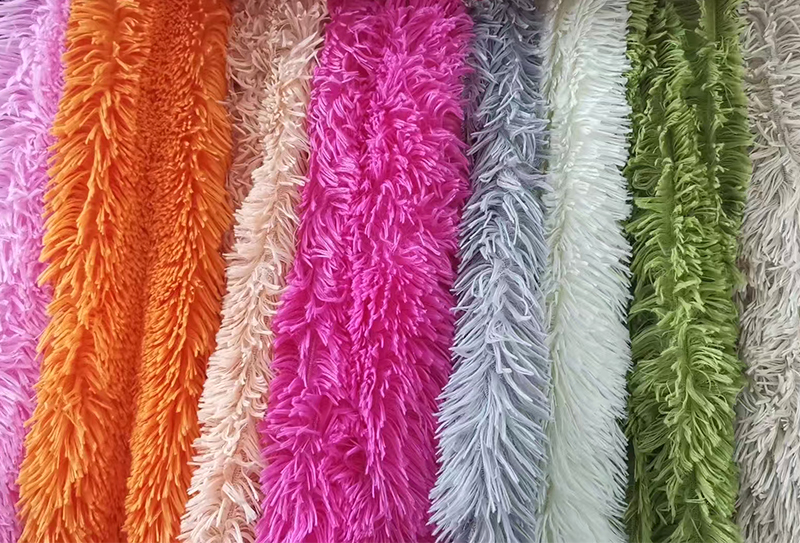
This 900mg*160cm small cloud plush fabric with large particles uses a three-dimensional embossing process to create a full and fluffy, large-particle plush effect. The high 900g/m weight provides exce...
See Details -
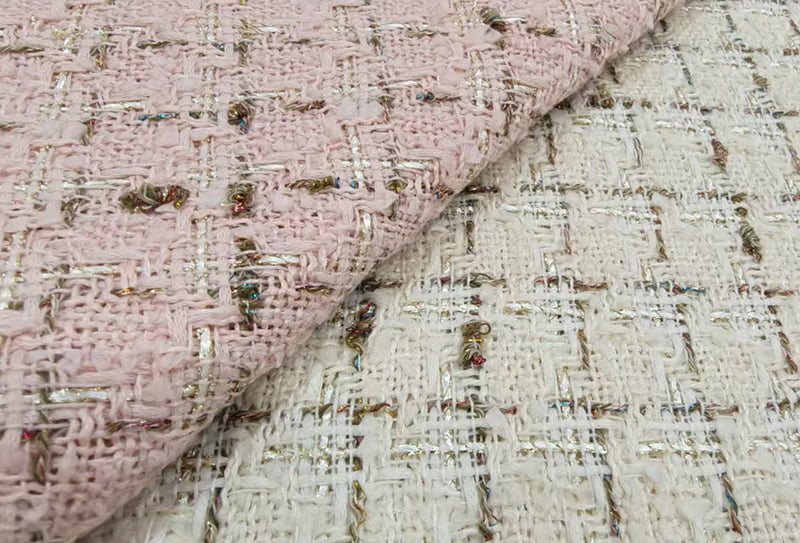
The 500g/148cm tweed fabric/Chanel-inspired fabric (Item No. LS834322) is precision-woven from high-count blended yarns. Its medium-heavy weight of 500g/m imparts excellent stiffness and warmth. Its 1...
See Details -

The 500g/148cm tweed fabric/Chanel-inspired fabric (item number LS780314) utilizes a high-density weave. Its 500g/m² weight imparts exceptional stiffness and drape, while its 148cm width maximizes uti...
See Details -
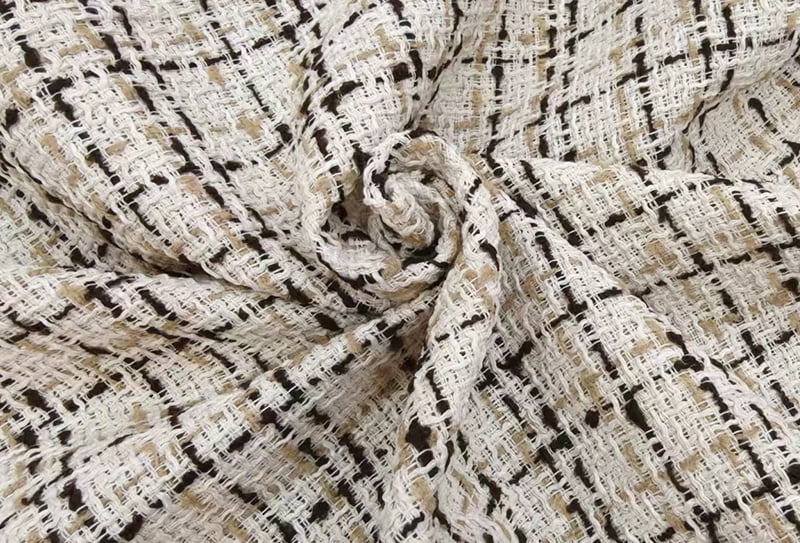
This 450g/148cm tweed fabric (item number LS540412) utilizes a high-density weave. Its 450g/m² weight imparts just the right amount of stiffness and flexibility, while its 148cm width is optimized for...
See Details -
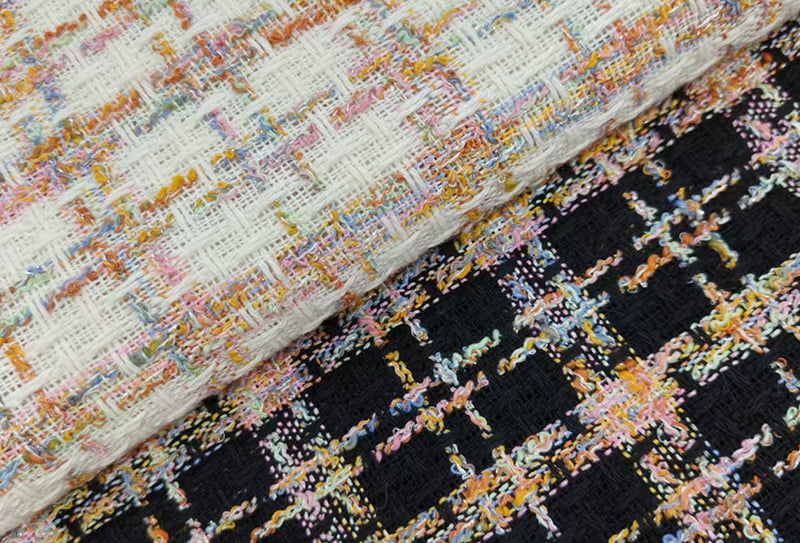
This 500g/148cm tweed fabric/Chanel-inspired fabric (item LS2517) utilizes a multicolored, ethnic-inspired weaving technique, innovatively blending traditional patterns with modern Chanel-inspired ele...
See Details
Contact us
 1027, Floor 1, Zone 1, Beilian Market, China Textile City, Keqiao District, Shaoxing City, Zhejiang Province, China
 +86-159 8821 9333

Copyright © Shaoxing Wanyi Textile Co., Ltd. All Rights Reserved
Custom Soft Faux Fur Fabric, Sherpa Fleece Material Manufacturers
