
 English
 中文简体
中文简体510g/170cm spandex ultra-soft short plush fabric adopts 95% polyester + 5% spandex blending process. The 300g/m weight and elastic fiber give the fabric excellent close-fitting comfort. The 170cm ultr...
See DetailsEngineering Analysis: Influence of GSM and Fiber Denier on Artificial Rabbit Fur Performance
Content
Physical Properties and Fiber Morphology of Synthetic Furs
* The Correlation Between Fiber Denier and Tactile Fidelity: The sensory authenticity of artificial rabbit fur is fundamentally dictated by the fiber denier, which measures the linear mass density of the filaments. To achieve a skin-friendly touch, manufacturers typically utilize ultra-fine micro-polyester or modified acrylic fibers. Comparing acrylic vs polyester for artificial rabbit fur reveals that while polyester offers higher tensile strength, acrylic provides a superior loft that mimics the natural guard hairs of biological fur. The impact of fiber denier on faux fur softness is measurable; a lower denier (typically 0.8D to 1.5D) results in a more fluid, silken hand-feel, whereas higher denier fibers increase the structural resilience of the pile. * GSM and Volumetric Density Analysis: The grams per square meter (GSM) of artificial rabbit fur is the primary indicator of its thermal insulation and plushness. Industrial-grade fabrics range from 600 GSM to 1200+ GSM. A high GSM vs low GSM faux fur durability study shows that denser fabrics exhibit less pile flattening under mechanical compression. This density is achieved through optimizing stitch density in knitted faux fur, ensuring that the base fabric can securely anchor each filament. * Fiber Composition and Chemical Resistance: The chemical composition of artificial rabbit fur often involves 100% polyester or blends. Utilizing recycled polyester for sustainable artificial fur is increasingly common to meet GRS (Global Recycled Standard) requirements. These synthetic polymers provide inherent resistance to moths and biological degradation, unlike protein-based natural fibers.
Shedding Resistance and Mechanical Anchor Integrity
* Anti-Shedding Finishing Processes: One of the most critical technical indicators for artificial rabbit fur is its shedding resistance. This is managed during the back-coating phase, where a polymer resin is applied to the base knit. Effective shedding resistance in artificial rabbit fur is achieved when the resin penetrates the interstices of the yarns, locking the micro-fibers in place. This process is essential for preventing pile loss in synthetic fur garments during high-friction wear. * Mechanical Pile Retention Testing: Engineers evaluate durability using specialized equipment to measure the force required to extract fibers from the base. Maintaining high faux fur pile retention standards ensures that the fabric can withstand industrial sewing and domestic laundering without significant volume loss. * Dimensional Stability and Base Warp Resilience: The artificial rabbit fur base must resist elongation. Using a high-denier polyester ground yarn ensures the dimensional stability of faux rabbit fur, preventing the garment from sagging or distorting over time. [Image showing cross-section of faux fur pile anchoring and base knit structure]
Laundering Resilience and Long-Term Loft Preservation
* Hydrophobic Properties and Wash Recovery: Synthetic fibers are naturally hydrophobic, which assists in preserving the loft of artificial rabbit fur after washing. Unlike natural fur, which can become brittle, artificial rabbit fur maintains its Ra surface finish smoothness if treated with the correct silicone-based softening agents during the finishing stage. * Anti-Matting and Anti-Static Treatments: To address the common issue of fiber clumping, preventing matting in artificial rabbit fur requires the application of anti-static chemicals. These agents reduce surface resistivity, which is the best way to reduce static in polyester fur, preventing the attraction of dust and maintaining the individual separation of the filaments. * Thermal Stability During Drying: While polyester fur is durable, it has a lower melting point than natural fibers. Engineers specify maximum drying temperatures (typically 60 Celsius) to avoid thermal fiber damage in synthetic furs, which can lead to permanent crimping or a harsh texture.
| Technical Specification | Standard Grade | Premium Engineering Grade |
| Fiber Denier (D) | 2.0D - 3.0D | 0.8D - 1.2D (Microfiber) |
| Weight (GSM) | 300 - 500 | 800 - 1200+ |
| Shrinkage (ISO 6330) | Less than 5% | Less than 2% |
| Color Fastness (Light) | Grade 3-4 | Grade 4-5 |
Quality Control and Compliance for Global Export
* Eco-Toxicological Standards: High-quality artificial rabbit fur must comply with OEKO-TEX Standard 100. This ensures the absence of harmful formaldehyde or heavy metals in the dyes. Sustainability certifications for artificial fur are now a mandatory requirement for entering European and North American retail markets. * Evaluation of Price-to-Performance Ratios: When sourcing for mass production, evaluating the price-to-performance ratio of artificial fur involves balancing GSM with fiber length. A long-pile artificial rabbit fur may require a higher GSM to maintain density, preventing the "grinning" effect where the base fabric becomes visible through the fibers.
Technical FAQ
1. Does a higher GSM always mean better quality artificial rabbit fur? Not necessarily. While a higher GSM of artificial rabbit fur indicates more material and density, the quality is also dependent on the tensile strength of the base fabric and the shedding resistance of the finishing coating. 2. How does denier affect the shedding of the fur? Lower denier fibers are finer and can be more difficult to lock into the base. Therefore, artificial rabbit fur with very fine fibers requires a superior back-coating process to ensure high shedding resistance. 3. Can artificial rabbit fur be recycled? Yes, specifically those made from 100% polyester. Utilizing recycled polyester for sustainable artificial fur is a standard practice for brands aiming to reduce their carbon footprint. 4. What is the most effective way to prevent matting? The best way to prevent matting in artificial rabbit fur is the application of advanced silicone finishing during manufacturing and following low-heat drying protocols during maintenance. 5. What is "Pile Retention" and why is it measured? Pile retention measures how well the fibers are anchored. It is a vital technical indicator for artificial rabbit fur to ensure the fabric does not lose its plush appearance after mechanical abrasion or washing.
Technical References
* ISO 12947-2: Textiles - Determination of the abrasion resistance of fabrics by the Martindale method. * ASTM D1335: Standard Test Method for Tuft Bind of Pile Floor Coverings (adapted for faux fur). * AATCC 135: Dimensional Changes of Fabrics after Home Laundering.
Hot News
-
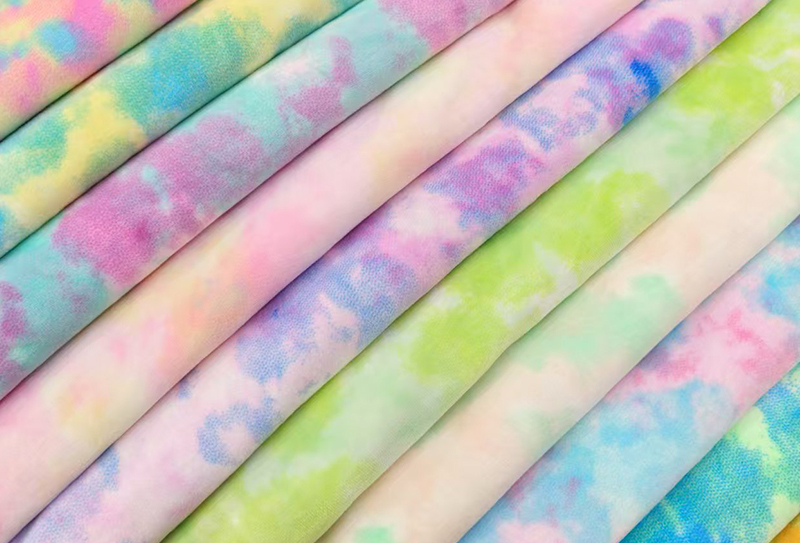
-
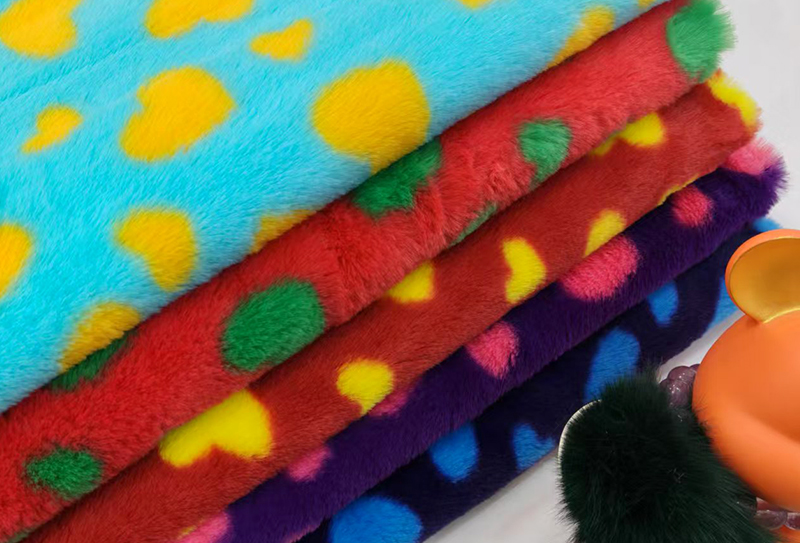
This 500mg x 160cm soft plush fabric with a heart print utilizes a printing process to create a clear, three-dimensional heart pattern on a 280g high-quality plush base fabric. The 500g/m lofty weight...
See Details -
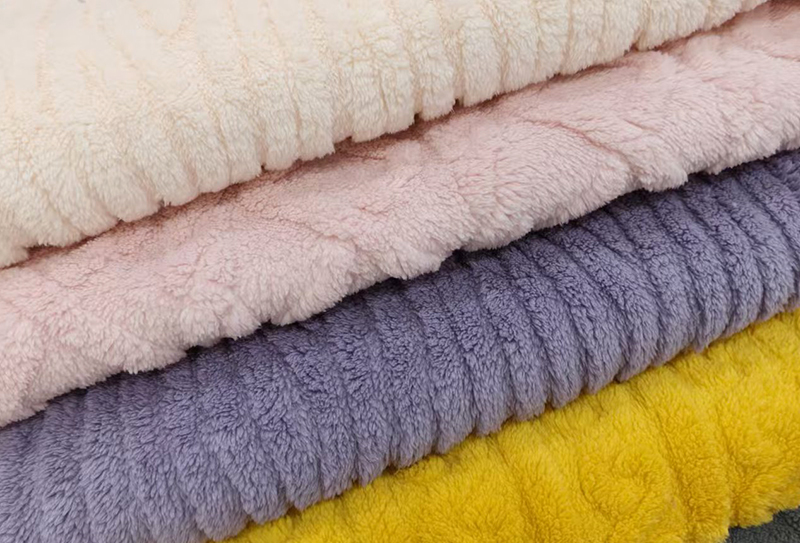
This 280gsm*185cm double-sided 3D jacquard comfortable cotton velvet fabric utilizes an innovative double-sided weaving process, creating distinct 3D jacquard patterns on both sides. The 280g/m weight...
See Details -
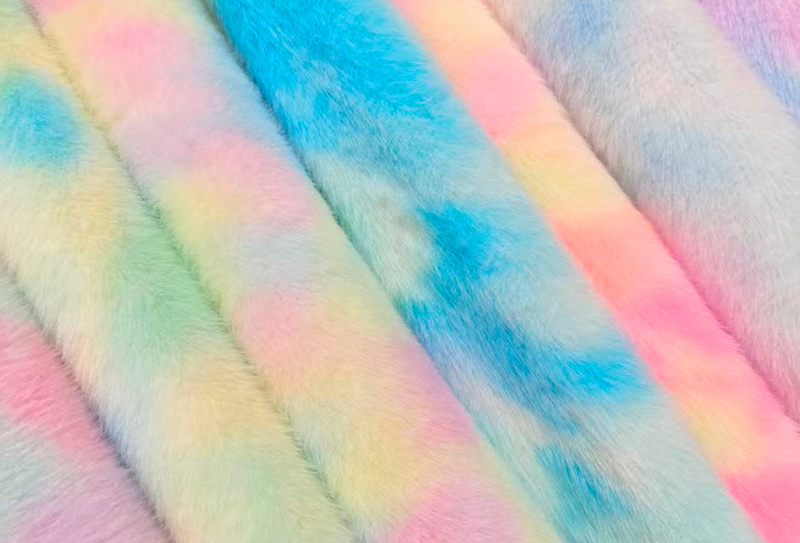
European mink print rainbow colors500 GSM160mm width100% polyesterStarting from 1 meter: 30 RMB/meter500 meters: 18 RMB/meterOver 1000 meters: 16 RMB/meterPrices are in RMB.This 500GSM European faux m...
See Details -
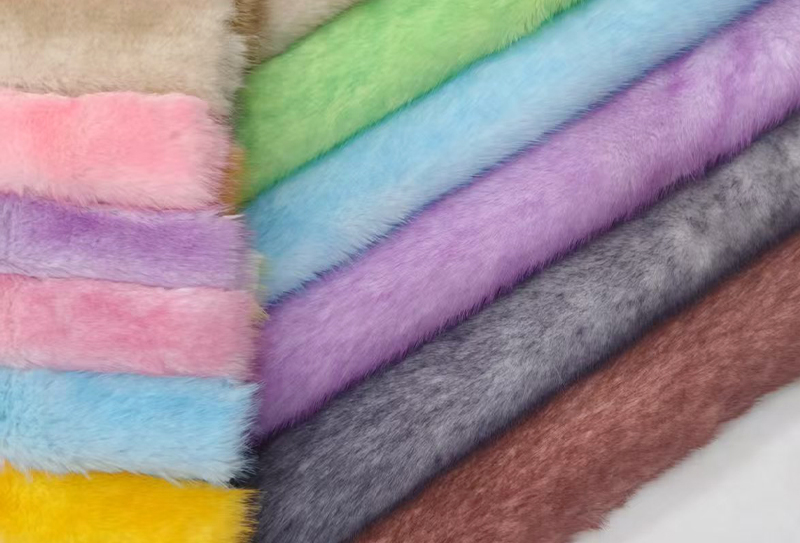
This 700g thickened, 165cm rainbow mink imitation fox fur fabric utilizes a gradient dyeing technique to create a naturally transitioning rainbow effect. The high-density base fabric combined with the...
See Details -
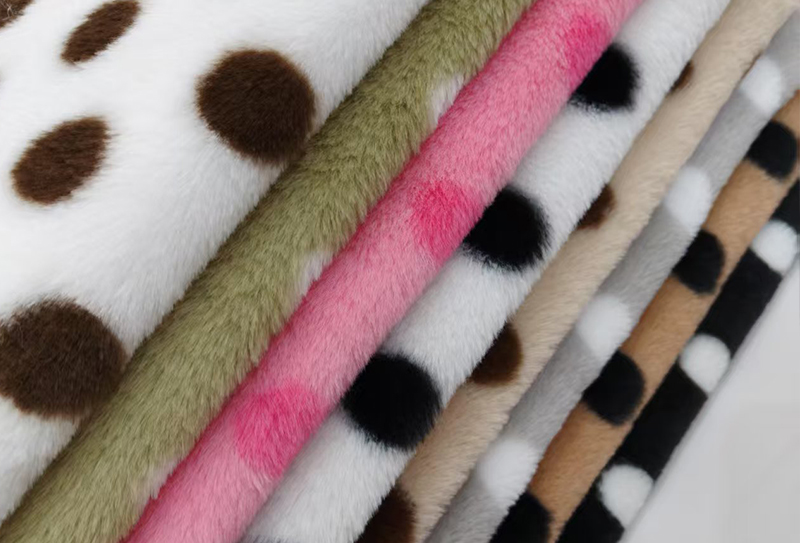
The 500g/160cm rabbit fur printed polka dot fabric uses printing technology to create a three-dimensional and full polka dot pattern on a high-quality imitation rabbit fur base fabric. The medium-thic...
See Details
Contact us
 1027, Floor 1, Zone 1, Beilian Market, China Textile City, Keqiao District, Shaoxing City, Zhejiang Province, China
 +86-159 8821 9333

Copyright © Shaoxing Wanyi Textile Co., Ltd. All Rights Reserved
Custom Soft Faux Fur Fabric, Sherpa Fleece Material Manufacturers
