
 English
 中文简体
中文简体This 290gsm*165cm Haipai velvet fabric is easy to care for and 30mm thick, making it suitable for clothing, toys, pet beds, blankets, and other decorative applications. Its excellent wear resistance a...
See DetailsPreventing Particle Flattening in Particle Fabrics: Heat-Setting Curly Textures
Content
- 1 Why Curly Particle Fabrics Lose Their Plush Appeal
- 2 What Is Heat-Setting in Particle Fabric Manufacturing?
- 3 How Heat-Setting Preserves Curly Textures
- 4 Key Factors That Determine Heat-Setting Quality
- 5 Heat-Setting, Quality Control, and Long-Term Performance
- 6 How to Maintain Curly Particle Fabric After Production
- 7 Choose Particle Fabrics with Reliable Curl Retention
- 8 Frequently Asked Questions
Why Curly Particle Fabrics Lose Their Plush Appeal
Curly particle fabrics are prized for their springy, three-dimensional surface, which gives clothing, toys, and home textiles a soft and tactile finish. This texture depends on thousands of small loops that stand upright across the fabric surface. When those loops collapse, the fabric takes on a flattened, matted appearance that is difficult to reverse.
Preventing particle flattening starts with understanding how curly particle fabrics are engineered. The main causes of flattening include prolonged compression, high humidity, aggressive washing, and mechanical friction. Yet the root cause often goes deeper: if the fiber structure has not been thermally stabilized during production, the loops have no memory that helps them spring back after stress. This is where heat-setting becomes essential.
What Is Heat-Setting in Particle Fabric Manufacturing?
Particle fabric is commonly made from polyester or other thermoplastic fibers. Heat-setting is a controlled thermal treatment applied after the loops have been formed. The fabric is heated to a temperature that softens those fibers, allowing the molecular chains to relax and rearrange around the curled loop shape. As the fabric cools, the new arrangement is locked in place, giving the loops dimensional stability.
Heat-setting is especially important for curly particle fabrics because the loop height and curvature are the main visual and tactile selling points. Without this step, curls can relax over time, especially during garment cutting, sewing, shipping, and daily use.
| Stage | Purpose | Typical Effect |
|---|---|---|
| Fiber preparation | Remove internal stress from earlier drawing | More uniform curl |
| Loop formation | Create raised particle loops | Defined surface structure |
| Heat-setting | Stabilize polymer chains | Permanent curl memory |
| Cooling | Fix the molecular arrangement | Resilient, springy loops |
How Heat-Setting Preserves Curly Textures
The science behind heat-setting is straightforward. Polyester fibers soften when heated and harden when cooled. During heat-setting, the fiber is held near its glass transition temperature while being kept in a relaxed, low-tension state. This allows the polymer chains to adopt the shape of the looped surface. When cooled, crystalline areas reform and hold the curl in a stable position.
The goal is not simply to apply heat, but to control tension, time, and cooling so that every loop keeps its intended height and direction.
Curl Memory
The most important benefit of heat-setting is curl memory. Particle fabric that has been properly heat-set returns to its original texture after being compressed during packing or end use. This makes the fabric more forgiving in production and more comfortable for consumers.
Dimensional Stability
Heat-setting also reduces shrinkage and distortion. When the fabric is later cut and sewn, the loops remain anchored and the base fabric resists stretching. This is especially valuable for patterned or printed designs where a distorted ground fabric can ruin the visual effect.
Key Factors That Determine Heat-Setting Quality
Not all heat-setting is the same. The final texture depends on several process parameters, and a responsible supplier will adjust them according to fiber type, fabric weight, and target curl height.
- Temperature: Typical heat-setting temperatures for polyester particle fabrics range from 140°C to 190°C. Low temperatures are not enough to stabilize the loops, while high temperatures can make the hand feel stiff or yellow the fibers.
- Dwell time: The fabric must stay in the heat chamber long enough for heat to penetrate both the loops and the base structure. Too short a time leaves the curl unstable.
- Tension: Low tension during setting allows the loops to stand upright. Excessive tension pulls the loops flat and cancels the intended effect.
- Cooling rate: Gradual cooling helps form stable crystalline zones inside the fiber. Rapid cooling can lock in internal stress, making the curl more likely to flatten later.
Heat-Setting, Quality Control, and Long-Term Performance
Even a well-designed heat-setting recipe can be undone by inconsistent production. A reliable particle fabric manufacturer follows a clear quality control routine that checks the effectiveness of heat-setting before fabric is delivered.
- Loop height measurement after cooling to confirm that the curls have not collapsed.
- Compression recovery tests to simulate packing and transportation stress.
- Washing simulation to evaluate curl retention under real conditions.
- Visual and hand-feel inspection to detect uneven setting or fiber damage.
These checks are particularly important for buyers who plan to use curly particle fabrics in products that will be washed, bent, or heavily handled. Heat-setting is not a single machine step; it is a complete system of thermal control, tension management, and verification.
How to Maintain Curly Particle Fabric After Production
Even the best heat-set fabric can be damaged by poor handling. Once the fabric reaches a factory or consumer, simple practices help preserve the curl.
- Wash at low temperature, ideally below 30°C, and avoid heavy spin cycles.
- Air dry in a flat position instead of tumble drying at high heat.
- Avoid long-term stacking under heavy weight; use rolled storage for bulk fabric.
- Steam lightly if the surface becomes temporarily flattened during sewing or packing.
These methods do not replace heat-setting, but they protect the curl memory that was engineered into the fabric.
Choose Particle Fabrics with Reliable Curl Retention
When sourcing particle fabric, the supplier’s heat-setting process matters as much as the fiber quality. At Shaoxing Wanyi Textile, each curly particle product is designed with controlled loop formation and thermal stabilization to ensure consistent volume, softness, and recovery. You can explore the full particle fabric collection to compare weights, widths, and curly textures.
For a soft, silky surface with a refined sheen, the bright silk down curly velvet offers a delicate hand with stable curl. If you need a more pronounced rolled grain, the kara roll curly grain fabric delivers an even, structured texture. For a lighter, airy feel with visible loop movement, the wind chime curly particle fabric is a versatile choice.
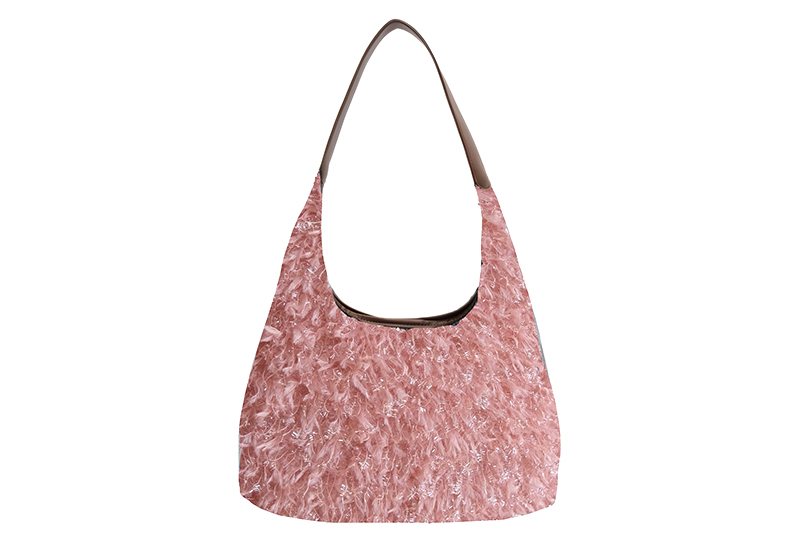 400g Bright Silk Down Curly Velvet Fabric for Bags and HatsThis lightweight silky velvet offers a soft, shimmering surface with stable curls, making it a refined option for fashion bags, winter hats, and high-end dolls after the discussion of curly fabric varieties.View Product →
 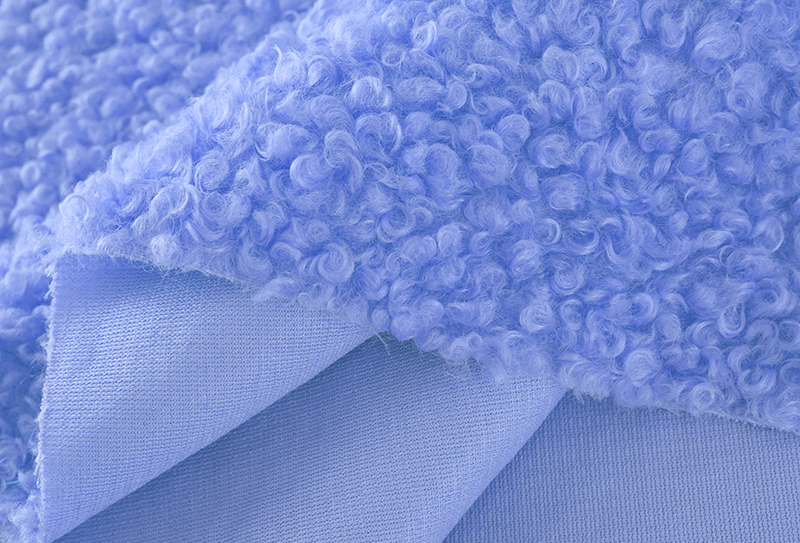 460gsm Kara Roll Curly Grain Fabric for Plush and Home TextilesWith a structured rolled grain and moderate weight, this fabric provides even texture and lasting curl, suited for plush toys, pillows, and pet products when a pronounced grain is needed.View Product →
 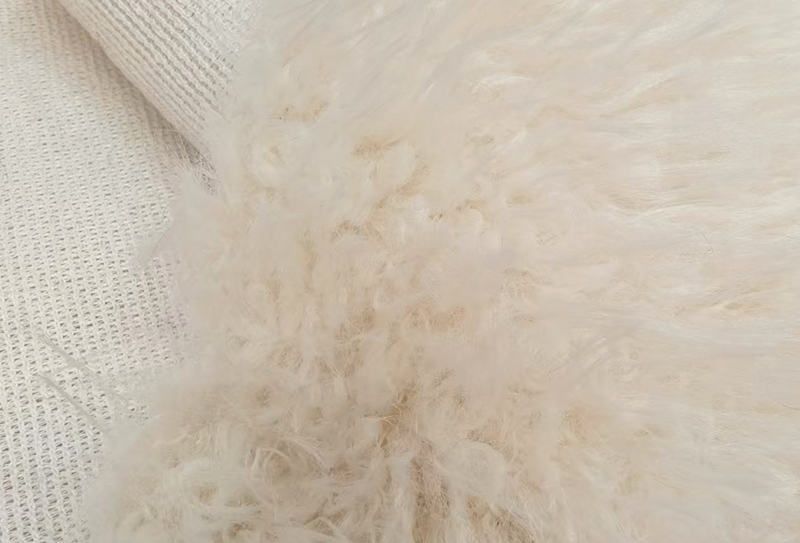 800g Wind Chime Curly Particle Fabric for Rugs and Creative UsesThis airy, high-weight fabric features bell-shaped curls that retain shape well, offering visible loop movement for home rugs, creative dolls, and linings as a versatile choice in the lineup.View Product →
Need help selecting the right curly particle fabric for your project? Understanding particle fabric basics can help you evaluate construction, weight, and finishing options before placing an order.
Frequently Asked Questions
Q1: Does heat-setting make particle fabric stiff?
No. When temperature and dwell time are correctly controlled, heat-setting stabilizes the loops without affecting the soft hand feel. Stiffness usually comes from excessive heat or resin application, not from heat-setting itself.
Q2: Can flattened particle fabric recover?
Mild flattening can sometimes be improved with low-temperature steaming followed by gentle brushing, but severe or permanent flattening is hard to reverse. That is why heat-setting during production is the most reliable way to maintain curl.
Q3: Is heat-setting used for all particle fabrics?
Most particle fabrics made from thermoplastic fibers such as polyester can benefit from heat-setting. Natural fibers that do not soften under heat require alternative finishing methods.
Hot News
-
-
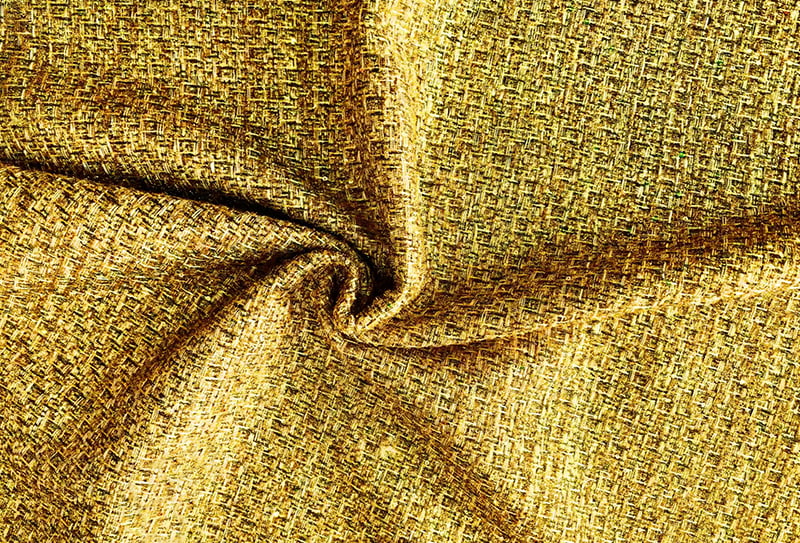
The 580g/148cm tweed fabric/Chanel-inspired fabric (item 0534) is a luxurious, light-weight fabric incorporating gold thread and sequins. Its thickened 580g/m² weight imparts a premium, crisp feel, wh...
See Details -
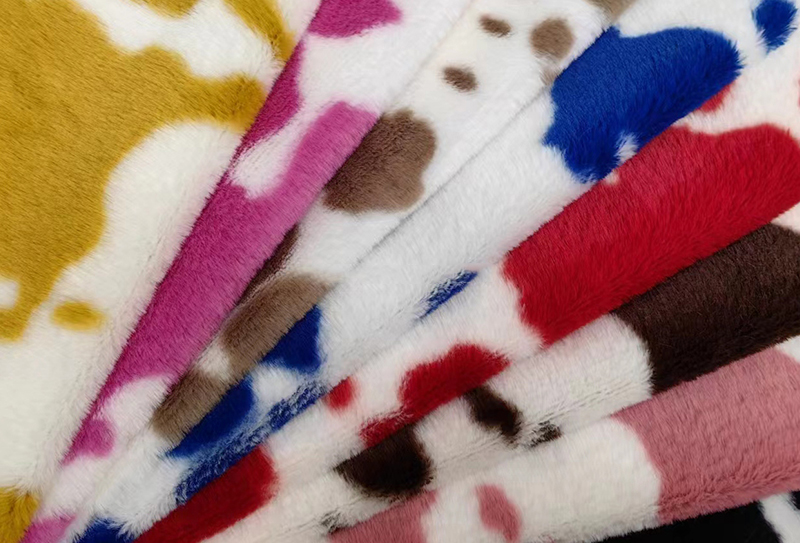
500g/160cm cow rabbit fur printed plush fabric uses printing technology to accurately restore the natural form of the black and white spots of the cow on the high-quality imitation rabbit fur base fab...
See Details -
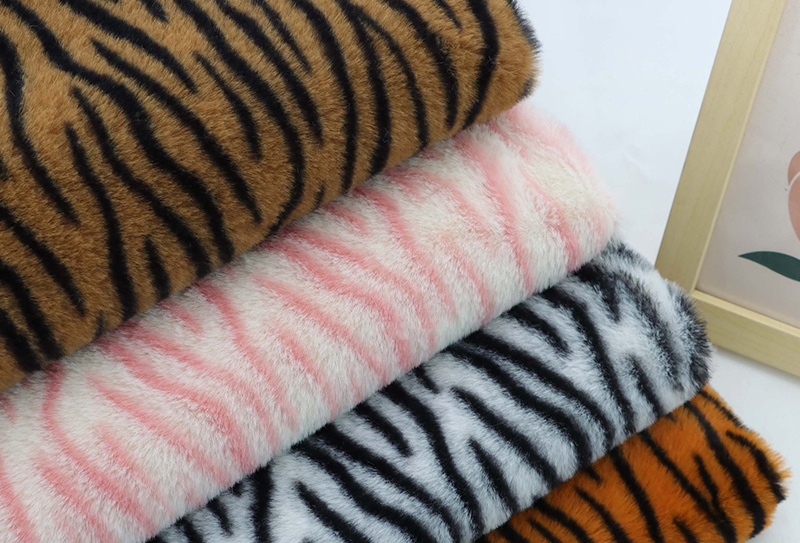
500g/160cm tiger-print rabbit fur print plush fabric uses printing technology to realistically present the wild stripes of tiger stripes on a high-quality imitation rabbit fur base fabric. The medium-...
See Details -
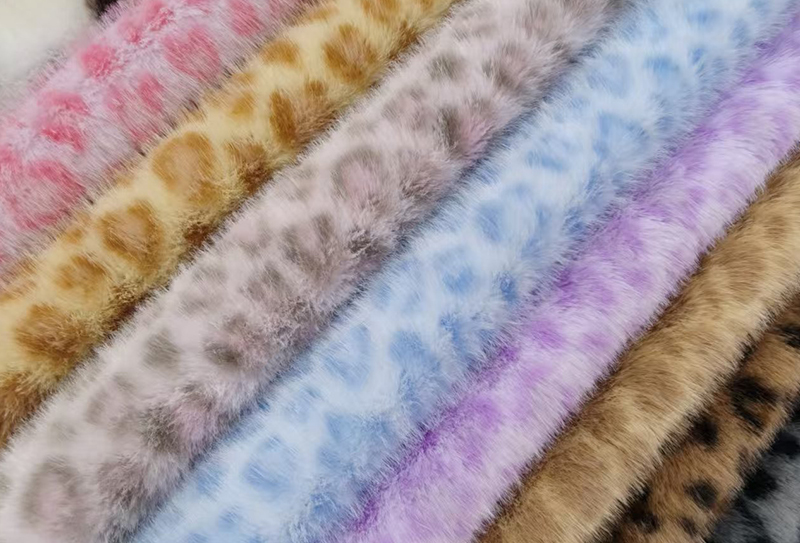
The 700g/170cm mink print leopard plush fabric uses an innovative printing process to create a wild leopard pattern on a mink-like base fabric through high-definition digital printing. The high weight...
See Details -
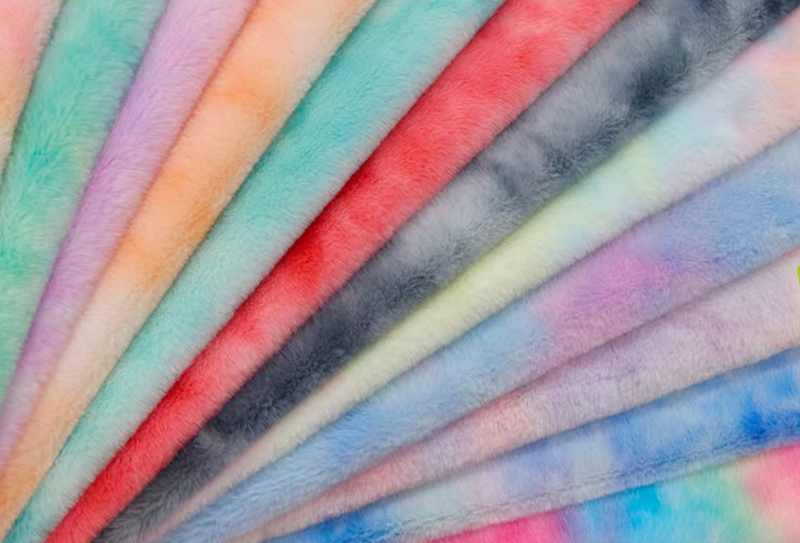
This 450g/165cm tie-dye printed rabbit fur fabric utilizes innovative digital inkjet technology to create an artistic tie-dye gradient effect on a base fabric that mimics rabbit fur. The lightweight 4...
See Details
Contact us
 1027, Floor 1, Zone 1, Beilian Market, China Textile City, Keqiao District, Shaoxing City, Zhejiang Province, China
 +86-159 8821 9333

Copyright © Shaoxing Wanyi Textile Co., Ltd. All Rights Reserved
Custom Soft Faux Fur Fabric, Sherpa Fleece Material Manufacturers
