
 English
 中文简体
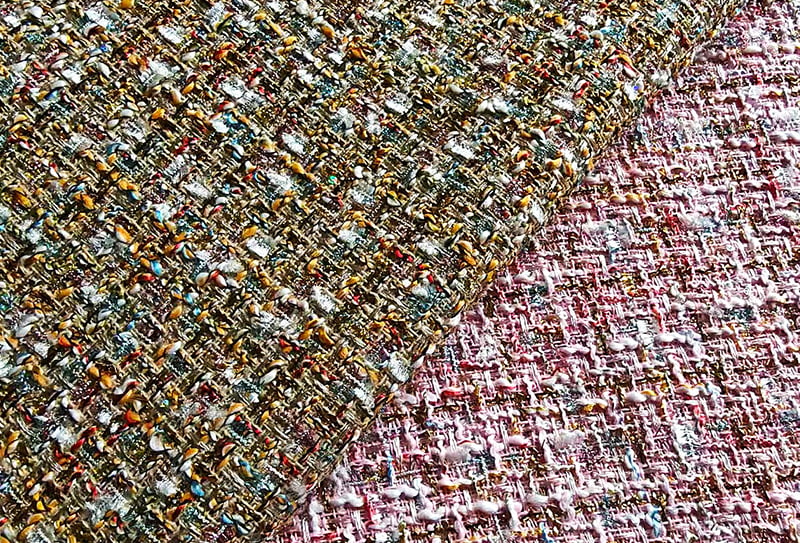
中文简体This 450g/148cm tweed fabric (item 1722) features a woven composite of gold and silver threads and sequins. Its thickened 450g/m weight imparts exceptional stiffness, while its 148cm width is optimize...
See DetailsSoft Faux Fur Fabric vs. Real Fur vs. Standard Acrylic Fur: A Technical Guide for Fashion and Home Textiles
1. Defining Soft Faux Fur Fabric: Structure and Material Composition
Soft faux fur fabric is a synthetic textile designed to replicate the appearance, texture, and warmth of real animal fur without using animal products. The fabric consists of two main components: the pile (the visible, soft surface) and the backing (the structural base). The pile is made from synthetic fibers such as acrylic, modacrylic, or polyester, which are engineered to achieve specific softness, luster, and crimp characteristics. Modacrylic fibers offer inherent flame retardancy, making them suitable for toys and upholstery where safety standards apply. Acrylic fibers provide excellent color retention and a soft, wool-like feel. Polyester fibers offer high strength and abrasion resistance. The pile fibers are knitted or woven into a backing fabric, typically made of woven polyester or cotton-polyester blend. The manufacturing process involves feeding fibers through a knitting machine (usually a warp knit or circular knit machine) that loops the pile fibers through the backing. The fabric then passes through brushing, shearing, and finishing processes to achieve the desired pile height, density, and surface texture. The result is a consistent, defect-free material that can be produced in large volumes with customizable pile lengths ranging from 5 mm to over 50 mm. For detailed technical specifications, sourcing professionals can refer to soft faux fur fabric product pages for material data sheets and test reports.
2. Soft Faux Fur vs. Real Fur: Ethical, Environmental, and Practical Differences
The choice between soft faux fur and real fur involves ethical, environmental, and practical considerations. Real fur comes from animals (mink, fox, rabbit, chinchilla) raised on fur farms or trapped in the wild. The production raises significant animal welfare concerns, leading to fur bans in several countries including the United Kingdom, Israel, and multiple US states (California, Massachusetts). Real fur also requires specialized cleaning and storage to prevent moth damage and matting. Soft faux fur involves no animal products. It is produced entirely from synthetic fibers in factory settings. From an environmental perspective, real fur is biodegradable but has a high environmental impact due to the resources required for animal rearing (feed, water, land, waste management). Faux fur is not biodegradable but has a lower carbon footprint per unit of warmth for most production scenarios. In terms of practical performance, real fur offers excellent breathability and natural temperature regulation. However, it is heavier, more expensive, and requires professional cleaning. High-quality soft faux fur offers good warmth, is machine washable (with care), is significantly less expensive, and is available in a wider range of colors and pile textures. The table below summarizes key differences.
| Feature | Soft Faux Fur Fabric | Real Fur (Mink, Fox, Rabbit, Chinchilla) |
|---|---|---|
| Ethical status | Cruelty-free, no animal products | Requires animal rearing or trapping; banned in several jurisdictions |
| Typical cost (relative) | Low to moderate | Very high (10-50x higher than faux fur) |
| Weight (gsm) | 200 - 500 gsm | 300 - 800 gsm (varies by animal) |
| Breathability | Moderate (varies by backing density) | Excellent (natural fibers allow air circulation) |
| Washing and care | Machine washable (gentle cycle, cold water, air dry) | Dry clean only; susceptible to moth damage |
| Color range | Virtually unlimited; color-fastness good | Limited to natural colors plus dyeing; dye may fade |
| Pile retention | Good (less than 1-3% shedding after finishing) | Natural shedding occurs; varies by animal and age |
3. Soft Faux Fur vs. Standard Acrylic Fur: Quality and Performance Tiers
Not all faux fur fabrics are equal. Standard acrylic fur (also called economy fur) is made from 100% acrylic fibers with a coarse backing. It has a stiff hand feel, lower pile density (fewer fibers per square centimeter), and poor shedding resistance (5-10% weight loss after washing). Soft faux fur fabric uses higher-quality fibers (often modacrylic blends or high-denier polyester), a softer backing, and dense pile construction (higher fiber density). The difference is immediately noticeable by touch: standard acrylic fur feels scratchy and plastic-like, while soft faux fur feels smooth, silky, and similar to animal fur. In terms of durability, soft faux fur achieves pile retention above 95% after 5000 Martindale abrasion cycles, while standard acrylic fur may show visible wear after 2000 cycles. Shedding resistance is another key differentiator: soft faux fur loses less than 0.5% of its pile weight after 50 home launderings; standard acrylic fur can lose 3-5% or more, creating visible lint and exposing the backing. The table below compares these two faux fur tiers.
| Feature | Soft Faux Fur Fabric (Premium) | Standard Acrylic Fur (Economy) |
|---|---|---|
| Typical fiber composition | Modacrylic / acrylic / polyester blends | 100% acrylic |
| Pile density (fibers per cm²) | High (dense, full surface) | Low to moderate (sparse, backing visible) |
| Hand feel | Soft, silky, smooth | Scratchy, stiff, plastic-like |
| Shedding (after 50 washes) | Less than 0.5% weight loss | 3% to 5% weight loss (visible lint) |
| Abrasion resistance (Martindale cycles before visible wear) | 5000+ cycles | 1500-2000 cycles |
| Color retention | Good to excellent | Moderate (may fade after 20-30 washes) |
| Cost (relative) | Moderate to high | Low to moderate |
4. Pile Types and Texture: Long Pile, Short Pile, Shaggy, and Embossed Finishes
Soft faux fur fabric is available in multiple pile lengths and finishes, each suited to different applications. Short pile fur (5 mm to 15 mm pile length) has a dense, velvety surface similar to sheared beaver or seal fur. It is used for lightweight jackets, linings, and upholstery where a low-profile plush look is desired. Short pile fur is also the most durable and easiest to clean. Medium pile fur (15 mm to 25 mm) offers a classic fur appearance similar to rabbit or fox. It is the most popular choice for fashion coats, jacket collars, and blankets. Medium pile provides a good balance between visual impact and practicality. Long pile fur (25 mm to 50 mm or more) has a dramatic, shaggy appearance similar to wolf or yak fur. It is used for statement coats, costume wear, and high-pile decorative pillows and throws. Long pile fur requires more careful maintenance and is more prone to matting if not properly finished. Shaggy fur is a specific type of long pile fur with uneven fiber lengths, creating a wild, textured appearance. Embossed faux fur has patterns pressed into the pile surface using heated rollers, creating visual textures such as animal prints, geometric patterns, or logos. This finish is popular for upholstery and fashion accessories.
5. Backing and Construction: Knitted vs. Woven Base for Dimensional Stability
The backing of soft faux fur fabric determines its dimensional stability, tear resistance, and ease of cutting and sewing. Two main construction methods are used: knitted backing and woven backing. Knitted backing is produced on warp knitting machines (such as Raschel or Tricot machines). The pile fibers are knitted simultaneously with the backing, creating an integrated structure. Knitted backing is flexible, stretchable (usually 20-40% stretch in the width direction), and breathable. It is the most common backing for apparel faux fur because it conforms to body contours and is comfortable to wear. However, knitted backing has lower tear strength than woven backing. Woven backing uses a woven polyester or cotton-polyester base fabric. The pile fibers are tufted or stitched through the woven base. Woven backing has minimal stretch (less than 10%) and high dimensional stability. It is used for upholstery faux fur, rug backing, and applications where the fabric must hold a precise shape without stretching. The choice of backing affects cutting and sewing recommendations. Knitted backing faux fur should be cut with a rotary cutter or shears (not a die cutter) to prevent edge fraying. Woven backing can be die-cut for high-volume production. The table below compares backing types.
| Backing Type | Stretch (width direction) | Tear Strength | Typical Applications | Cutting Method |
|---|---|---|---|---|
| Knitted (Raschel) | 20-40% | Moderate | Apparel (jackets, coats, vests, linings) | Rotary cutter or shears (avoid die cutting) |
| Woven (tufted) | Less than 10% | High | Upholstery, rugs, cushions, industrial applications | Die cutting or rotary cutter |
6. Performance Characteristics: Pile Retention, Shedding Resistance, and Color Fastness
Three performance characteristics define the quality of soft faux fur fabric. Pile retention measures how well the pile fibers remain anchored in the backing during use. The Martindale abrasion test is the industry standard. High-quality soft faux fur achieves 5000 to 10000 cycles with less than 5% pile loss. Economy grades may show significant pile loss after 2000 cycles. Shedding resistance measures how many loose fibers are released during normal handling, washing, or brushing. Shedding is tested by a brushing or tumble method: a measured fabric sample is brushed or tumbled for a specified duration, and the collected loose fibers are weighed. Soft faux fur should shed less than 0.5% of its pile weight. Standard acrylic fur may shed 3% or more. Color fastness measures how well the fabric retains its color when exposed to light, washing, and rubbing. ISO 105 B02 (light fastness) should achieve grade 4 or higher at 100 hours for apparel applications. Washing color fastness (ISO 105 C06) should achieve grade 4-5 for color change and staining of adjacent fabrics. Rubbing/crocking fastness (ISO 105 X12) should achieve grade 4 for both dry and wet rubbing. For products intended for children (plush toys, baby blankets), additional testing for azo dyes, formaldehyde, and heavy metals may be required under OEKO-TEX or similar standards.
7. Application Guide: Apparel, Home Textiles, Toys, and Upholstery
Soft faux fur fabric is used across multiple product categories, with specifications varying by application. For fashion apparel (coats, jackets, vests, collars, trims), knitted backing with short to medium pile (10 mm to 25 mm) is recommended. The fabric should have good drape and flexibility. For home textiles (blankets, throws, cushions, pillows), both knitted and woven backing are used depending on the desired stretch and shape retention. Medium to long pile (20 mm to 40 mm) creates a cozy, luxurious appearance. For plush toys and stuffed animals, short to medium pile (5 mm to 15 mm) with high pile retention is essential to prevent shedding that could be ingested by children. Modacrylic fibers with inherent flame retardancy are often specified for toys to meet safety standards. For upholstery (chairs, sofas, headboards), woven backing with short to medium pile (10 mm to 20 mm) and high abrasion resistance (Martindale 20,000+ cycles) is required. The fabric should also meet flammability standards such as CAL 117 or BS 5852. The table below matches applications with recommended specifications.
8. Quality Specifications for Export: Certifications and Testing Standards
For manufacturers exporting soft faux fur fabric, documented quality and compliance certifications are essential. The most requested standards and tests include: OEKO-TEX STANDARD 100 certification (testing for harmful substances; Class I for baby products, Class II for apparel, Class III for upholstery), Martindale abrasion test (ISO 12947 or ASTM D4966), Pile retention and shedding test (brushing method or tumble method), Color fastness to light (ISO 105 B02, grade 4 minimum at 100 hours for apparel), Color fastness to washing (ISO 105 C06, grade 4-5), Color fastness to rubbing/crocking (ISO 105 X12, grade 4 dry and wet), Flammability testing (CAL 117, BS 5852, or EN 1021 depending on destination market), and for products containing modacrylic fibers, inherent flame retardancy certification (no chemical treatment required). For faux fur exported to the European Union, REACH compliance is mandatory, including testing for SVHCs (substances of very high concern) and restricted azo dyes. Many large retailers also require factory audits covering ISO 9001 quality management systems and social compliance (BSCI or SMETA). Manufacturers who maintain current certifications and transparent quality records gain a competitive advantage in international sourcing.
Frequently Asked Questions About Soft Faux Fur Fabric
Q1: Is soft faux fur fabric machine washable?
A: Yes, most high-quality soft faux fur fabrics are machine washable on a gentle cycle with cold water. Air drying is recommended (do not tumble dry on high heat, as heat can melt synthetic fibers). Always check the manufacturer's care instructions. Some specialty faux fur (e.g., with foil or embossed finishes) may require dry cleaning.
Q2: How do I prevent my faux fur fabric from shedding?
A: Shedding is determined by pile retention during manufacturing. High-quality soft faux fur sheds less than 0.5% of its pile weight. To minimize shedding during use, avoid aggressive brushing and wash on a gentle cycle. Before cutting, shake the fabric outdoors to remove any loose surface fibers. If shedding persists, the fabric may be low quality (standard acrylic fur).
Q3: What is the difference between modacrylic and acrylic faux fur?
A: Modacrylic fibers contain a flame-retardant additive that gives them inherent flame resistance. Modacrylic faux fur is required for children's toys, upholstery, and products sold in jurisdictions with strict flammability standards. Acrylic fibers do not have inherent flame retardancy but offer good color retention and a soft hand feel. Acrylic is sufficient for apparel where flammability standards are less strict.
Q4: Can soft faux fur fabric be used outdoors?
A: Standard faux fur fabric is not recommended for outdoor use as moisture can cause the backing to degrade and UV exposure can cause color fading. For outdoor applications such as patio cushions, specify faux fur with UV-stabilized polyester fibers and water-resistant woven backing. These specialized fabrics are more expensive but will last longer outdoors.
Q5: What certifications should I request for faux fur fabric exported to Europe?
A: For European markets, request OEKO-TEX STANDARD 100 certification, REACH compliance documentation (including SVHC and azo dye testing), and for children's products, EN 71 safety testing. For upholstery, request EN 1021 flammability test reports. CE marking is not required for fabric alone but may be required for finished products containing fabric.
References and Further Reading
- International Organization for Standardization. (2022). ISO 12947-2:2016 – Textiles — Determination of abrasion resistance of fabrics by the Martindale method — Part 2: Determination of specimen breakdown. Geneva: ISO.
- International Organization for Standardization. (2022). ISO 105-B02:2014 – Textiles — Tests for colour fastness — Part B02: Colour fastness to artificial light: Xenon arc fading lamp test. Geneva: ISO.
- OEKO-TEX Association. (2025). OEKO-TEX STANDARD 100: General and Special Conditions. Zurich: OEKO-TEX Secretariat.
- American Association of Textile Chemists and Colorists. (2023). AATCC Test Method 135-2023: Dimensional Changes of Fabrics after Home Laundering. Research Triangle Park, NC: AATCC.
- SGS Group. (2024). Test Methods for Faux Fur Fabrics: A Technical Guide for Apparel and Home Textile Sourcing Professionals. Geneva: SGS Publications.
Hot News
-
-
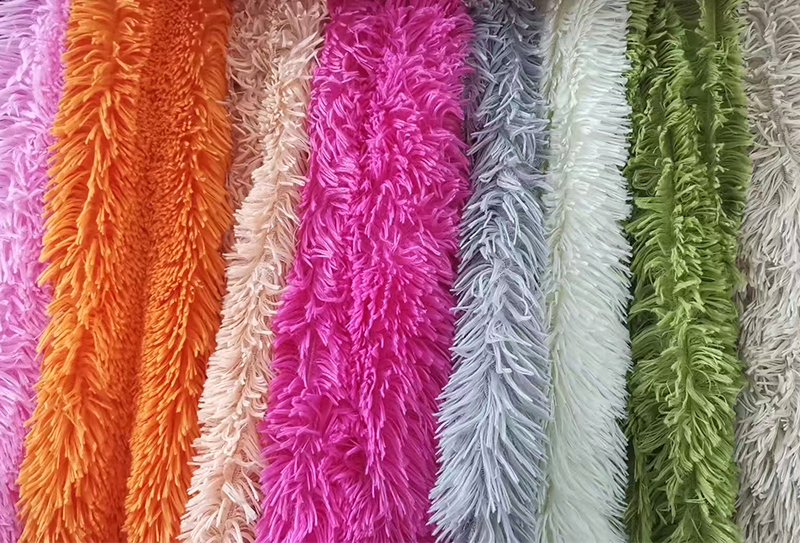
This 290gsm*165cm Haipai velvet fabric is easy to care for and 30mm thick, making it suitable for clothing, toys, pet beds, blankets, and other decorative applications. Its excellent wear resistance a...
See Details -
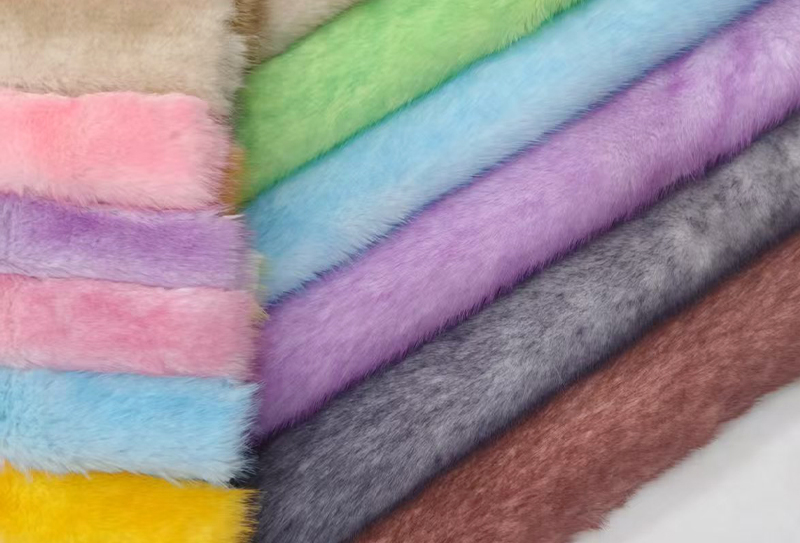
This 700g thickened, 165cm rainbow mink imitation fox fur fabric utilizes a gradient dyeing technique to create a naturally transitioning rainbow effect. The high-density base fabric combined with the...
See Details -
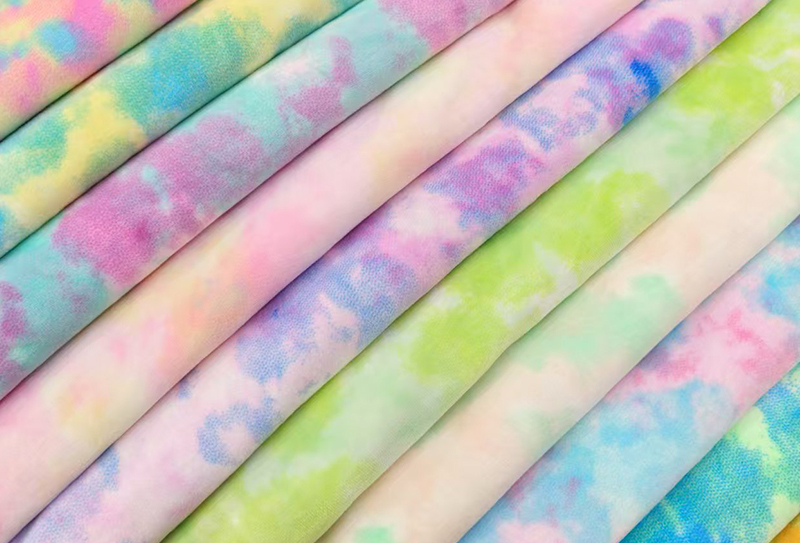
510g/170cm spandex ultra-soft short plush fabric adopts 95% polyester + 5% spandex blending process. The 300g/m weight and elastic fiber give the fabric excellent close-fitting comfort. The 170cm ultr...
See Details -
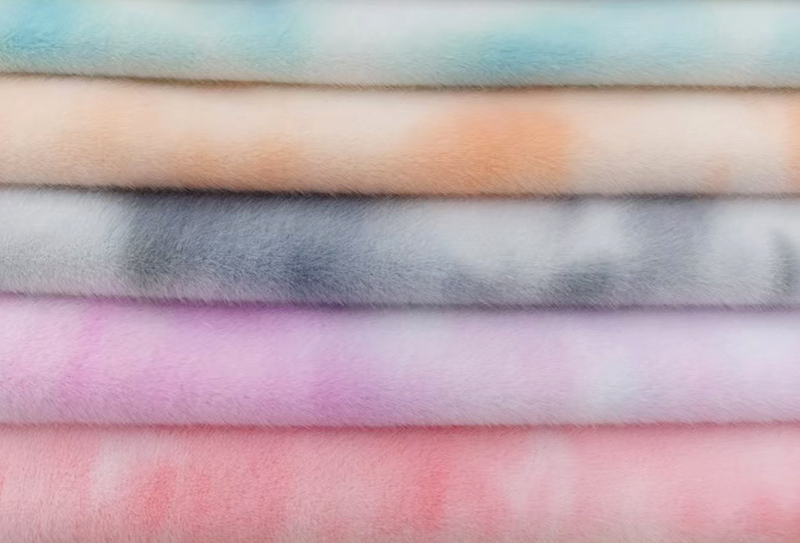
This 550g/160cm European mink tie-dyed plush fabric uses a tie-dye printing process to create an artistic gradient effect. Its medium-heavy 550g/m weight provides a rich feel, while its 160cm width al...
See Details -
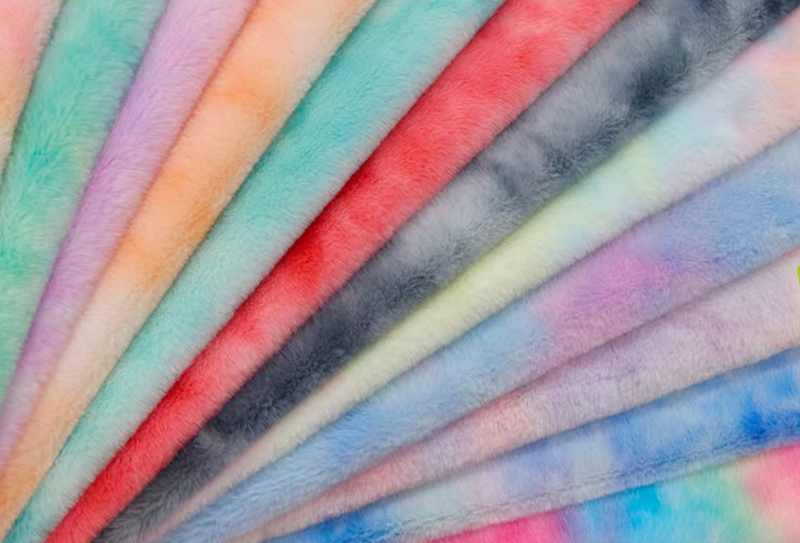
This 450g/165cm tie-dye printed rabbit fur fabric utilizes innovative digital inkjet technology to create an artistic tie-dye gradient effect on a base fabric that mimics rabbit fur. The lightweight 4...
See Details
Contact us
 1027, Floor 1, Zone 1, Beilian Market, China Textile City, Keqiao District, Shaoxing City, Zhejiang Province, China
 +86-159 8821 9333

Copyright © Shaoxing Wanyi Textile Co., Ltd. All Rights Reserved
Custom Soft Faux Fur Fabric, Sherpa Fleece Material Manufacturers
