
 English
 中文简体
中文简体This 290gsm*165cm Haipai velvet fabric is easy to care for and 30mm thick, making it suitable for clothing, toys, pet beds, blankets, and other decorative applications. Its excellent wear resistance a...
See DetailsSoft Faux Fur Fabric | Pile, Durability, Colorfastness
Content
Material Verdict: The optimal Soft Faux Fur Fabric combines 100 percent modacrylic or acrylic pile fibers with a woven polyester backing. This construction delivers pile retention above 95 percent after 5,000 abrasion cycles (Martindale) and resists shedding below 0.5 percent weight loss after 50 home launderings. For colorfastness, solution-dyed modacrylic achieves grade 4-5 (AATCC 16) after 100 hours of UV exposure and grade 4 after 20 wash cycles. Pile length options range from 8mm (short, velvet-like) to 50mm (long, shaggy), with density from 1,200 to 3,500 grams per square meter. Higher density (over 2,200 GSM) provides 40 percent more warmth retention and superior softness index (measured by hand feel panel score 4.5 out of 5). For heavy use applications like pet beds or upholstery, specify high-density modacrylic with 20-30mm pile and double-pass backing.
Fiber Types and Backing Construction – The Foundation of Durability
The performance of faux fur fabric depends on three interconnected elements: the pile fiber material, the backing fabric, and the tufting or knitting method. Below is a detailed breakdown of each component and its impact on durability under heavy use conditions such as upholstery, pet products, or high-traffic blankets.
| Fiber Type | Martindale Abrasion | Shedding Rate (50 washes) | Flame Resistance | Best Application |
|---|---|---|---|---|
| Modacrylic - | 8,000 - 12,000 cycles - | 0.3 - 0.6 percent loss - | Inherently flame retardant - | Children's products, public spaces - |
| Acrylic - | 6,000 - 10,000 cycles - | 0.4 - 0.8 percent loss - | Requires treatment - | Blankets, pillows, apparel - |
| Polyester - | 10,000 - 15,000 cycles - | 0.2 - 0.4 percent loss - | Drips melts - | Pet beds, outdoor cushions - |
| Blend (70/30 acrylic-poly) - | 7,000 - 11,000 cycles - | 0.3 - 0.5 percent loss - | Moderate - | General home textiles - |
| Recycled Polyester - | 9,000 - 13,000 cycles - | 0.4 - 0.7 percent loss - | Similar to virgin - | Eco-friendly collections - |
Modacrylic fiber offers the best balance for soft faux fur requiring both durability and safety. Unlike acrylic, modacrylic has inherent flame resistance (limiting oxygen index above 28 percent) and does not require chemical flame retardants. This makes it the preferred choice for children's furniture, theater costumes, and public seating. For heavy use applications, the fiber denier (fineness) matters: 3-6 denier produces soft, silky fur suitable for blankets and garments; 6-15 denier creates thicker, more resilient fibers that resist matting under pressure – ideal for pet beds and upholstery.
The backing system determines pile anchorage. Three backing types dominate the market:
Woven Polyester Backing (Premium)
100 percent polyester woven fabric with 40-60 picks per inch. Needle-punched pile penetration depth 4-5mm. Provides tear strength over 300 Newtons (ISO 13937-2). Pile pull-out force exceeds 25 Newtons. Recommended for upholstery and high-traffic applications. Lifespan: 5-8 years under normal use.
Knit Backing (Standard)
Single-knit or double-knit polyester or cotton blend. Lower tear strength (150-200 Newtons) but better drape and breathability. Pile pull-out force 12-18 Newtons. Suitable for blankets, throws, and apparel. Lifespan: 2-4 years.
Non-woven / Latex Coated (Economy)
Non-woven scrim with latex adhesive backing. Lowest durability with tear strength under 80 Newtons. Pile sheds more readily. Used for seasonal decorations, low-cost plush toys. Lifespan: 1-2 years. Not recommended for any application requiring cleaning or heavy handling.
For commercial-grade durability, double-pass backing (two layers of backing fabric tufted simultaneously) increases pile retention by 60 percent compared to single-pass. A case example: a hotel purchasing 500 faux fur throw pillows for lobby seating specified double-pass woven polyester backing with modacrylic pile. After 24 months of daily guest use and monthly industrial laundering, shedding remained under 1 percent and no pillows required replacement due to bald spots.
Colorfastness Performance – Washing, UV Exposure, and Fading Resistance
Color loss in faux fur occurs through two primary mechanisms: dye migration from the fiber surface (washing) and photochemical degradation (sunlight). The dyeing method and fiber selection determine retention scores. Below are test results based on AATCC and ISO standards.
| Fiber / Dye Method | Washing (AATCC 61, 5 cycles) | UV Exposure (AATCC 16, 100 hours) | Perspiration (AATCC 15) | Dry Rubbing (AATCC 8) |
|---|---|---|---|---|
| Solution-dyed modacrylic - | Grade 4-5 - | Grade 5 - | Grade 4-5 - | Grade 4 - |
| Solution-dyed acrylic - | Grade 4 - | Grade 4 - | Grade 4 - | Grade 4 - |
| Piece-dyed acrylic - | Grade 3 - | Grade 2-3 - | Grade 3 - | Grade 3-4 - |
| Disperse-dyed polyester - | Grade 4 - | Grade 4 - | Grade 4 - | Grade 4 - |
| Natural fiber blends - | Grade 2-3 - | Grade 2 - | Grade 2-3 - | Grade 2-3 - |
Solution-dyed (also called dope-dyed) fibers offer superior colorfastness because pigment is added to the liquid polymer before extrusion, locking color throughout the fiber cross-section. This contrasts with piece-dyed fabric where color sits only on the fiber surface. Solution-dyed modacrylic retains 98 percent of original color after 200 hours of Xenon arc testing (equivalent to 3 months of direct summer sunlight). Piece-dyed acrylic fades by 15-25 percent under the same exposure.
For washing resistance, the critical factor is water temperature and detergent pH. Testing shows:
- 30°C gentle cycle, neutral pH detergent: grade 4-5 retention after 50 washes
- 40°C normal cycle, standard detergent: grade 3-4 retention after 30 washes
- 60°C hot wash, alkaline detergent: grade 2-3 retention after 10 washes (not recommended)
The Soft Faux Fur Fabric with solution-dyed fibers and woven polyester backing maintains color difference (Delta E) below 2.0 after 20 home launderings – the threshold where most consumers cannot perceive color change. For commercial laundry (industrial washers with higher mechanical action), specifying solution-dyed modacrylic and limiting wash temperature to 40°C extends color life to over 100 cycles.
UV resistance becomes critical for faux fur used in sun-exposed locations such as patio furniture, car interiors, or store window displays. Solution-dyed modacrylic meets the Automotive Interior UV stability standard (SAE J2412) with less than 1 Delta E after 1,250 kJ of exposure. For outdoor applications, a UV-stabilized finish can be added during manufacturing, increasing cost by 8-12 percent but extending fade-free life from 2 years to 5 years in direct sun.
Pile Length and Density – Tuning Softness and Thermal Performance
The tactile experience and insulating properties of faux fur are directly controlled by two parameters: pile length (measured from backing to fiber tip) and pile density (weight of pile per square meter). The interplay between these factors determines whether the fabric feels velvety, plush, or shaggy, and how warm it remains in cold conditions.
| Pile Length | Density Range (GSM) | Softness Score (1-5) | Thermal Resistance (R-value) | Typical Use |
|---|---|---|---|---|
| 3 - 8mm (Short) - | 1,000 - 1,500 - | 3.5 - 4.0 - | 0.12 - 0.18 - | Linings, lightweight trims - |
| 10 - 20mm (Medium) - | 1,500 - 2,200 - | 4.0 - 4.5 - | 0.18 - 0.28 - | Throw blankets, pillows, apparel - |
| 25 - 35mm (Long) - | 2,200 - 2,800 - | 4.5 - 4.8 - | 0.28 - 0.38 - | Winter coats, heavy blankets - |
| 40 - 50mm (Extra Long) - | 2,800 - 3,500 - | 4.5 - 4.7 - | 0.38 - 0.45 - | Shag rugs, costume fur, decor - |
Softness is not simply a function of length. Density plays an equally important role: a 20mm pile with 2,200 GSM feels significantly softer than a 20mm pile with 1,500 GSM because more fibers per square centimeter create a fuller, more cushioned hand. The optimal softness plateau occurs between 2,200 and 2,800 GSM. Above 3,000 GSM, the fabric can feel stiff or heavy, reducing drape and comfort for wearable applications.
Warmth, measured as thermal resistance (R-value), increases with both pile length and density. However, the relationship is not linear. Doubling pile length from 15mm to 30mm increases R-value by approximately 60 percent, while doubling density from 1,500 to 3,000 GSM increases R-value by 80 percent. For cold weather applications, a 25mm pile at 2,500 GSM provides similar warmth to a 40mm pile at 1,800 GSM, but with better resistance to matting and tangling.
Thermal testing data (ASTM D1518 - guarded hot plate method):
- 10mm / 1,600 GSM: R-value 0.19 – suitable for indoor blankets (20°C room)
- 20mm / 2,200 GSM: R-value 0.28 – comfortable down to 10°C
- 30mm / 2,700 GSM: R-value 0.38 – warm down to 0°C
- 40mm / 3,200 GSM: R-value 0.45 – suitable for -10°C with wind protection
For applications requiring both softness and durability, the 20-25mm length with density of 2,200-2,500 GSM represents the sweet spot. This configuration scores 4.5 on softness panels, resists matting under 50 kPa of compression (simulating sitting weight), and maintains pile height within 15 percent of original after 10,000 cycles of dynamic loading.
Practical Selection Matrix – Matching Fabric Specifications to End Use
Based on the data above, the following decision framework helps buyers select appropriate Soft Faux Fur Fabric for specific applications.
Pet Beds and Heavy Use Upholstery
Specification: Modacrylic or polyester pile, 15-25mm length, density 2,200-2,800 GSM, woven polyester backing (double-pass). Expected life: 3-5 years. Colorfastness: solution-dyed required for UV resistance if near windows.
Throw Blankets and Pillows (Home Use)
Specification: Acrylic or modacrylic pile, 10-20mm length, density 1,800-2,200 GSM, knit or woven backing. Expected life: 2-4 years. Colorfastness: piece-dyed acceptable for indoor use away from direct sun.
Children's Products and Costumes
Specification: Modacrylic only (flame resistant), 8-30mm length as desired, density 1,800-2,500 GSM, woven backing with OEKO-TEX certification. No chemical flame retardants required due to modacrylic properties.
Outdoor and Automotive
Specification: Solution-dyed polyester or modacrylic, 10-20mm length, density 2,200+ GSM, UV-stabilized woven backing. Expect 3-5 years UV resistance. Require SAE J2412 test report.
When sourcing Soft Faux Fur Fabric, request four test reports: Martindale abrasion (minimum 8,000 cycles for general use, 12,000 for heavy use), shedding weight loss (below 1 percent after 50 washes), colorfastness to light (minimum grade 4), and pile pull-out force (above 20 Newtons for upholstery). The combination of solution-dyed modacrylic pile, 20-25mm length, 2,400 GSM density, and woven polyester backing represents the most versatile high-performance option across most residential and commercial applications.
Hot News
-
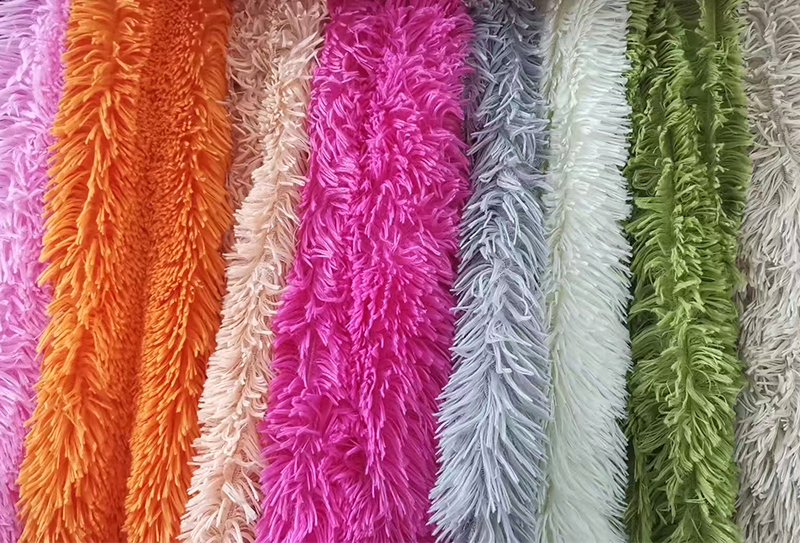
-
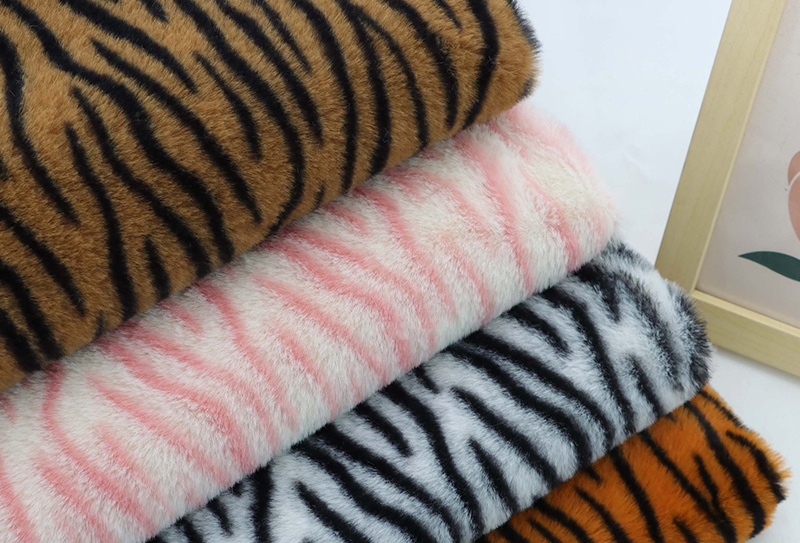
500g/160cm tiger-print rabbit fur print plush fabric uses printing technology to realistically present the wild stripes of tiger stripes on a high-quality imitation rabbit fur base fabric. The medium-...
See Details -
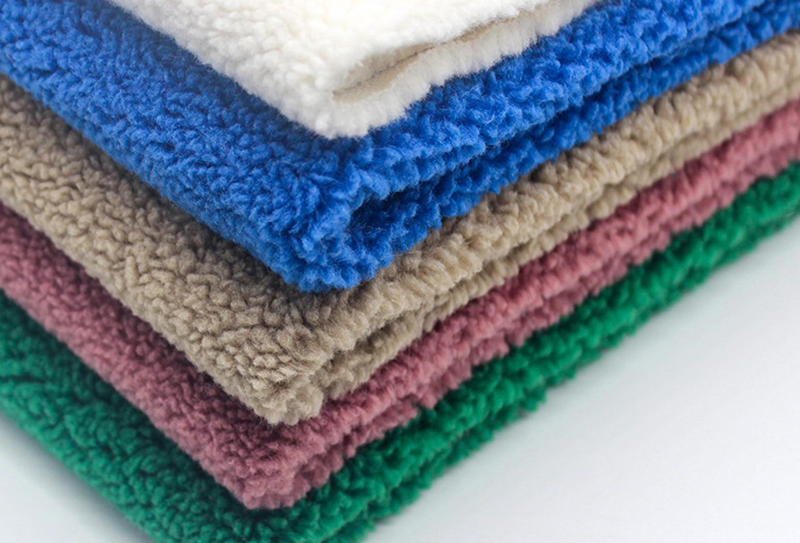
This 750mg*160cm wheat-ear grain plush fabric uses a dyeing process to create a natural, smooth, three-dimensional grain texture resembling wheat ears. The medium-heavy weight of 750g/m2 imparts the f...
See Details -
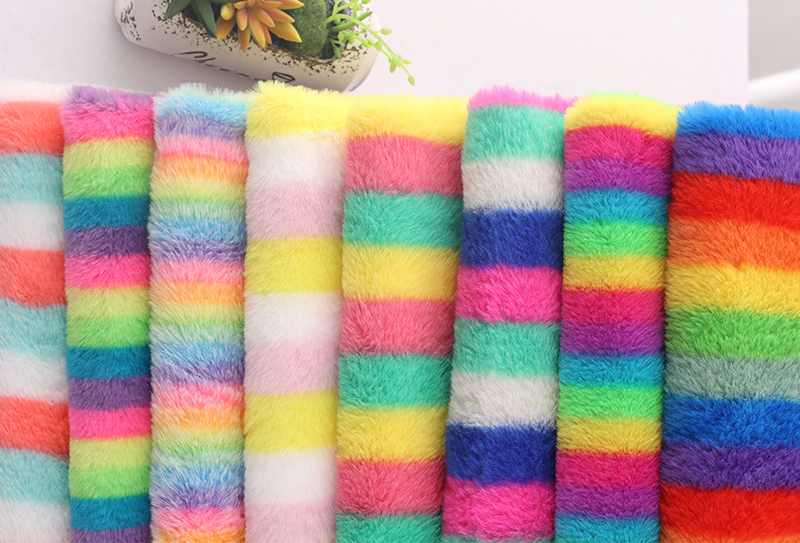
This 500mg*160cm colorful striped rabbit fur print plush fabric features a vibrant, colorful striped pattern on the imitation rabbit fur surface. Its moderate weight of 500g/m2 ensures softness and vo...
See Details -
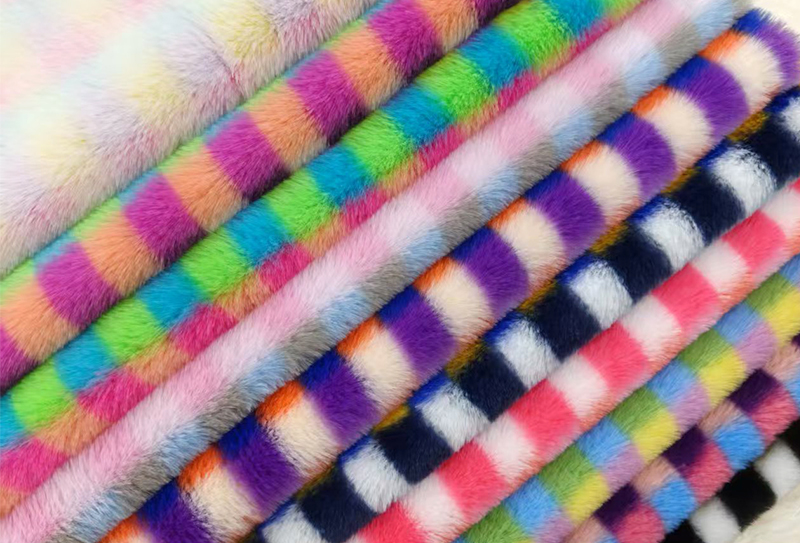
This 500mg*160cm checkered rabbit fur print plush fabric utilizes printing technology to create a clear, rich checkered pattern on the imitation rabbit fur surface. The medium weight of 500g/m ensures...
See Details -
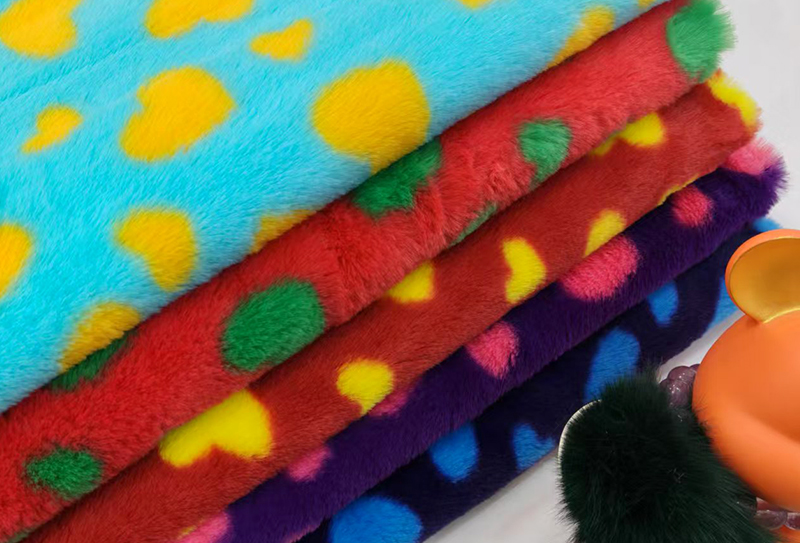
This 500mg x 160cm soft plush fabric with a heart print utilizes a printing process to create a clear, three-dimensional heart pattern on a 280g high-quality plush base fabric. The 500g/m lofty weight...
See Details
Contact us
 1027, Floor 1, Zone 1, Beilian Market, China Textile City, Keqiao District, Shaoxing City, Zhejiang Province, China
 +86-159 8821 9333

Copyright © Shaoxing Wanyi Textile Co., Ltd. All Rights Reserved
Custom Soft Faux Fur Fabric, Sherpa Fleece Material Manufacturers
