
 English
 中文简体
This 290gsm*165cm Haipai velvet fabric is easy to care for and 30mm thick, making it suitable for clothing, toys, pet beds, blankets, and other decorative applications. Its excellent wear resistance a...
See DetailsSpandex Super-Soft Short Plush vs Velboa: Stretch & Feel in Plush Toys
Content
- 1 What Are Spandex Super-Soft Short Plush and Standard Velboa?
- 2 Stretchability: Where the Two Fabrics Diverge
- 3 Hand-Feel: Silky Softness versus Clean Firmness
- 4 Pile Height, Fabric Weight, and Backing Performance
- 5 Matching the Fabric to Your Plush Toy Design
- 6 What to Confirm Before Placing a Bulk Order
- 7 Frequently Asked Questions
For a plush toy designer, few decisions affect the final product more than the choice of covering fabric. Among short-pile polyester fabrics, two names dominate orders from toy factories: spandex super-soft short plush and standard velboa. Both are cost-effective and mass-production friendly, yet they feel very different when a customer picks the toy up. This article compares the two fabrics specifically on stretchability and hand-feel, so you can match the material to the toy you are actually building.
What Are Spandex Super-Soft Short Plush and Standard Velboa?
Before comparing the two, it helps to define each material precisely.
Standard Velboa
Standard velboa is a short-pile knit fabric made from 100% polyester. Its pile is dense, evenly clipped, and usually between 1 mm and 3 mm high. Because the backing is dimensionally stable and the pile is short, velboa holds its shape well, resists seam distortion, and takes embroidery and printed details with clean registration. Its hand-feel is smooth and slightly firm, which is why velboa has been the default cover fabric for mass-produced character plush for decades. For a broader look at how short-pile fabrics compare with minky, fleece, and other alternatives, see our guide to short plush fabric versus other plush types.
Spandex Super-Soft Short Plush
Spandex super-soft short plush is a polyester fabric with a small percentage of spandex, usually 3% to 10%, knitted into the base. The spandex creates genuine elasticity, typically two-way or four-way stretch, while the face is made of ultra-fine polyester microfibers. The result is a short pile that feels silky and plush, with a springy quality that distinguishes it from velboa immediately.
| Property | Spandex Super-Soft Short Plush | Standard Velboa |
|---|---|---|
| Fiber Content | Polyester + spandex | 100% polyester |
| Stretch | Two-way or four-way | Minimal to none |
| Pile Height | 1-2 mm, ultra-fine fibers | 1-3 mm, even pile |
| Hand-Feel | Silky, springy, soft | Smooth, firm, dry |
| Shape Retention | Recovers after stretch | Very stable |
| Typical Use | Huggable toys, pillows, premium plush | Character toys, detailed embroidery, high-volume lines |
Stretchability: Where the Two Fabrics Diverge
Stretchability is the single clearest point of separation between spandex super-soft short plush and standard velboa. Spandex super-soft short plush typically reaches 20% to 40% elongation before recovery. This elasticity does two things for a plush toy. First, it increases the perceived softness of the finished product: a panel that yields under thumb pressure feels softer even when the stuffing inside is identical. Second, it helps the fabric wrap around curved pattern pieces, reducing puckering at armholes, ears, and facial contours.
Standard velboa, by contrast, is engineered for stability. Its backing has almost no give, so every piece holds its intended dimensions during cutting, sewing, and stuffing. This keeps large production runs consistent, but it also means the finished toy has a firmer, more rigid feel. When a customer squeezes a velboa toy, there is no give and no rebound.
In practice, stretch translates into squish. A spandex super-soft toy yields in the hand and springs back; a velboa toy stands its ground.
For designers creating comfort animals, sleeping companions, or oversized stuffed toys where huggability is the primary selling point, the elastic property of spandex super-soft short plush is a decisive advantage.
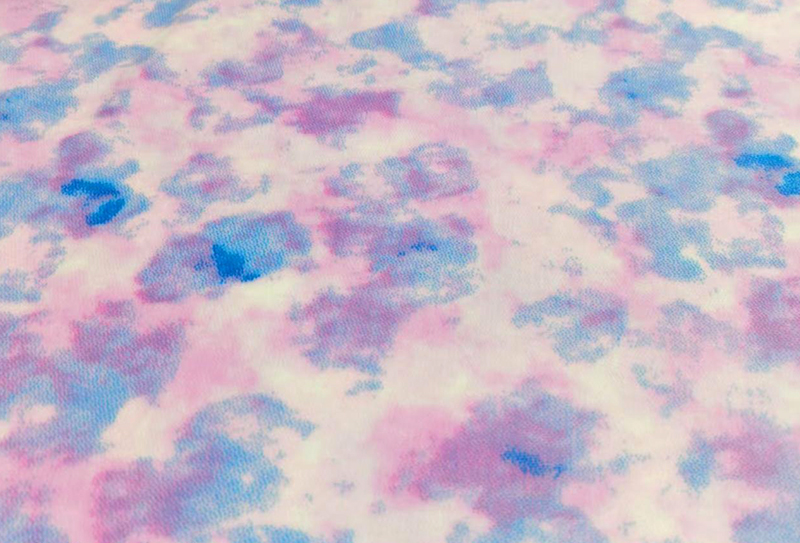 Stretchy 300GSM Spandex-Blend Short Plush FabricThis ultra-soft short plush with 5% spandex offers two-way stretch and a skin-friendly 1.2mm pile, making it ideal for huggable toys and close-fitting garments where comfort and elasticity matter most.View Product →
Hand-Feel: Silky Softness versus Clean Firmness
Hand-feel is what customers remember when they pick up a plush toy, and the two fabrics sit at opposite ends of the short-pile spectrum.
Spandex super-soft short plush uses ultra-fine microfibers arranged in a dense but lightweight pile. Low denier creates a silky, velvety surface that many buyers describe as buttery. Because the spandex in the backing allows individual fibers to flex freely, the surface also feels warmer and more alive than a static pile. This is the fabric you want when the product brief says people cannot stop touching it.
Standard velboa offers a smooth, dry, and deliberately firm hand. Its fibers are slightly coarser and the pile is clipped flatter, so the surface is even and dependable. Cheap velboa grades can feel thin or shiny, so specify premium quality if hand-feel matters to your brand. In blind softness tests, most users rank spandex super-soft short plush above standard velboa, but they also note that velboa feels cleaner and more precise against the palm.
Pile Height, Fabric Weight, and Backing Performance
Beyond the sensory layer, the two fabrics separate on three measurable parameters: pile height, weight, and backing construction.
- Pile height: Standard velboa runs 1-3 mm with straight, evenly aligned fibers. Spandex super-soft short plush is typically 1-2 mm, but the fibers are finer denier, so the surface feels denser and softer than its height suggests.
- Fabric weight: Velboa for toys usually lands between 200 and 350 GSM. Spandex super-soft short plush ranges from 280 to 510 GSM, with heavier versions giving a more substantial, premium drape.
- Backing structure: Velboa uses a firm knit base with minimal yarn mobility. Spandex super-soft short plush uses a spandex-reinforced knit base that stretches and recovers, which is the root of its elastic hand-feel.
When you browse supply catalogs, you will see weights and widths listed explicitly. A typical spandex super-soft short plush product, for example, is offered at 170 cm width with a high GSM weight, which is wide enough for large body panels. Always match the listed GSM to your toy size: heavier fabric suits large plush, while lighter versions work better for small accessories.
Matching the Fabric to Your Plush Toy Design
There is no universal winner between spandex super-soft short plush and standard velboa. The right choice depends on what the toy must do, who it is for, and how it will be produced.
Choose spandex super-soft short plush when:
- The toy is designed for hugging, such as comfort animals, sleep companions, and jumbo plush.
- You want a premium silky hand that separates the product on the shelf.
- The pattern contains curved panels or complex contours that benefit from stretch during assembly.
- The target buyer is a gift shopper who prioritizes tactile softness over price.
Choose standard velboa when:
- The design depends on detailed embroidery, printed facial features, or decorative topstitching.
- The toy must hold a clean silhouette without distortion during stuffing, transit, or display.
- Production volume is high and cost per meter drives the buying decision.
- You need identical cutting behavior across multiple SKUs in the same collection.
Many factories combine both fabrics in a single toy: spandex super-soft short plush for the body and limbs, where softness and hug appeal matter most, and standard velboa for the face, paws, and other detail-heavy panels. This hybrid approach gives you the best of both material philosophies.
What to Confirm Before Placing a Bulk Order
Whichever fabric you choose, a few checks will prevent unpleasant surprises in production.
Stretch and recovery
For spandex super-soft short plush, request the elongation percentage and recovery rate. A well-made fabric should return to its original dimensions after being stretched to 130% of its length, and should still recover fully after repeated cycles.
Pilling and abrasion resistance
Short-pile microfiber surfaces should be tested for pilling. Low-quality velboa can look fuzzy after light rubbing; premium specifications should survive thousands of abrasion cycles without visible pilling.
Colorfastness and dye lots
Toys are washed, squeezed, and exposed to humidity. Confirm that both the pile and the backing are colorfast, and ask the supplier for a shade band so you can check lot-to-lot consistency.
Safety compliance
For the US, EU, and other regulated markets, verify that the fabric meets the relevant toy safety requirements, typically ASTM F963, EN71, or REACH. Request test reports before mass production begins.
Finally, ask for a physical sample. A swatch photo cannot communicate stretch behavior or true hand-feel. Sew a simple body panel from the sample fabric, stuff it, and squeeze it. That ten-second test will tell you more than any specification sheet. It is also worth reviewing the actual options in the short plush fabric range from Wanyi Textile before you lock down your specification.
Frequently Asked Questions
Q1: Is spandex super-soft short plush more expensive than standard velboa?
Yes, usually by a moderate margin. Spandex adds material cost, and the finer microfibers require more careful knitting. The price gap narrows when you factor in lower waste from easier assembly on curved patterns.
Q2: Can spandex super-soft short plush be embroidered as cleanly as velboa?
It can, but the stretch can cause slight registration issues on dense embroidery. Use an appropriate interlining backing and reduce embroidery tension. For very fine facial features, many manufacturers prefer velboa or a fused panel.
Q3: Which fabric is more suitable for washable plush toys?
Both are polyester-based and machine-washable under normal conditions. Spandex super-soft short plush retains its elasticity better when washed cold and dried on low heat. Velboa is more dimensionally stable over repeated wash cycles, but both should be tested if the toy must pass institutional washing standards.
Q4: Does spandex content affect dyeing or color consistency?
Spandex fibers can absorb disperse dyes slightly differently from polyester, so shade variation is possible at higher spandex percentages. A controlled dye process keeps this within commercial tolerances, but always ask for a full shade band before committing to a large order.
The choice between spandex super-soft short plush and standard velboa comes down to the experience you want the end user to have. Spandex super-soft short plush gives you stretch, squish, and a silky hand that makes toys feel alive and huggable. Standard velboa gives you stability, precision, and cost efficiency that keeps mass production predictable. By understanding how pile height, backing structure, and spandex content shape each fabric, you can match the material to the product, or combine both in the same toy to get exactly the feel you are after.
Hot News
-
-
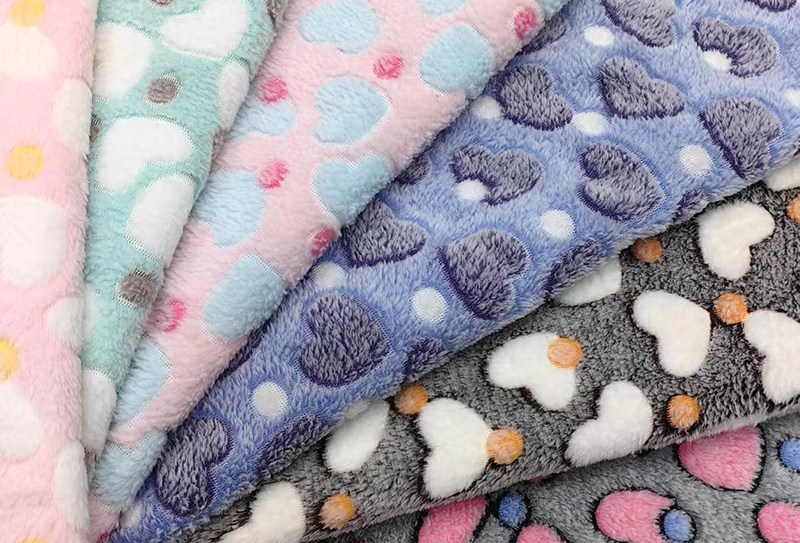
230g/160cm double-sided flannel three-dimensional printed plush fabric adopts innovative double-sided embossing technology to achieve a double-sided three-dimensional printing effect on a lightweight ...
See Details -
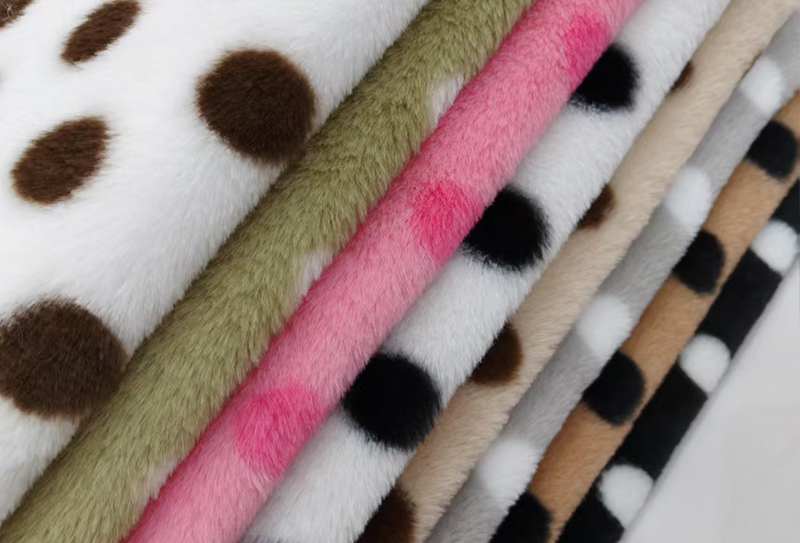
The 500g/160cm rabbit fur printed polka dot fabric uses printing technology to create a three-dimensional and full polka dot pattern on a high-quality imitation rabbit fur base fabric. The medium-thic...
See Details -
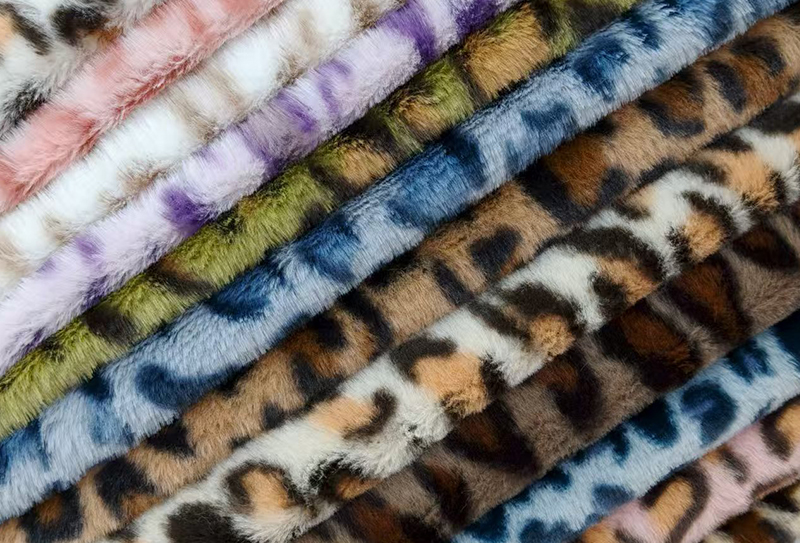
This 500g/160cm leopard-print rabbit fur plush fabric utilizes printing technology to create a realistic leopard pattern on a high-quality imitation rabbit fur base fabric. The medium-heavy 500g/m wei...
See Details -

This 500g/160cm leopard loop rabbit fur print plush fabric utilizes printing technology to create a unique leopard print and geometric loop pattern on a faux rabbit fur base. The medium-heavy 500g/m w...
See Details -
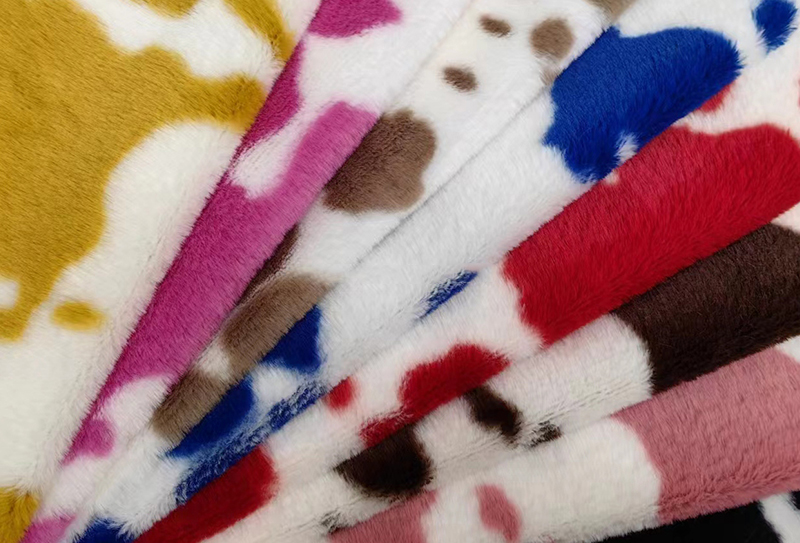
500g/160cm cow rabbit fur printed plush fabric uses printing technology to accurately restore the natural form of the black and white spots of the cow on the high-quality imitation rabbit fur base fab...
See Details
Contact us
 1027, Floor 1, Zone 1, Beilian Market, China Textile City, Keqiao District, Shaoxing City, Zhejiang Province, China
 +86-159 8821 9333

Copyright © Shaoxing Wanyi Textile Co., Ltd. All Rights Reserved
Custom Soft Faux Fur Fabric, Sherpa Fleece Material Manufacturers
