
 English
 中文简体
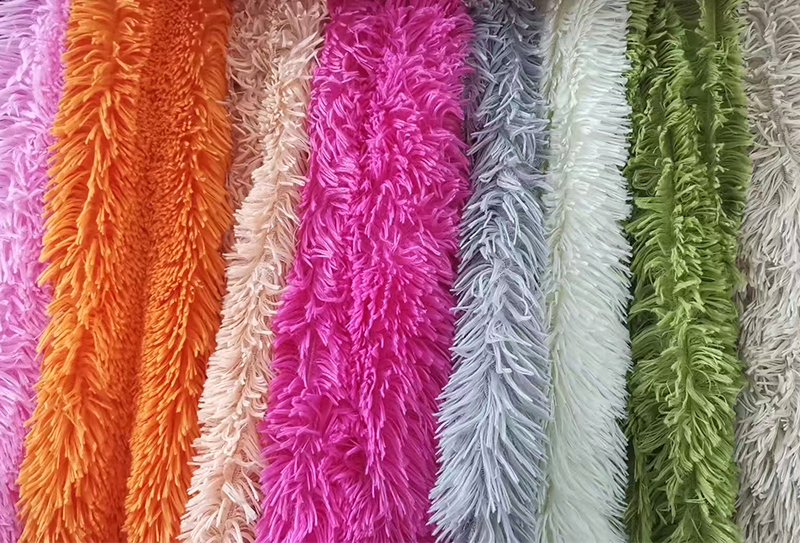
中文简体This 290gsm*165cm Haipai velvet fabric is easy to care for and 30mm thick, making it suitable for clothing, toys, pet beds, blankets, and other decorative applications. Its excellent wear resistance a...
See DetailsWhy Is Three-Dimensional Jacquard Fabric More Expensive Than Regular Fabric?
Content
The textile industry offers a vast spectrum of materials, ranging from basic plain weaves to highly intricate decorative fabrics. Among these, Three-dimensional Jacquard Fabric stands out not only for its visual appeal and tactile texture but also for its significantly higher price point compared to regular fabrics. For designers, product developers, and procurement specialists, understanding the cost drivers behind 3D jacquard is essential for making informed decisions.
This analysis explores the core reasons for the price disparity, dissecting the technology, materials, and manufacturing processes that set this advanced textile apart from standard woven or printed fabrics.
Core Cost Drivers in 3D Jacquard Production
The elevated cost of 3D jacquard fabric is not attributed to a single factor but is the result of a confluence of technical, material, and process-related demands. Unlike regular fabrics that can be produced quickly and in bulk with minimal setup, 3D jacquard requires a level of precision and engineering that fundamentally alters the economics of production.
Weaving Complexity and Machinery
The foundational reason for the higher cost lies in the machinery and the complexity of the weaving process. Regular fabrics, such as plain weave or twill, are produced on standard looms with a limited number of heddles and simple shedding mechanisms. In contrast, creating a three-dimensional structure requires an electronic jacquard loom equipped with hundreds, or even thousands, of individually controlled hooks. For instance, producing a sophisticated relief effect may require a machine with 2400 needles or more, each controlling a single warp thread.
- Setup Time: Programming a jacquard loom for a complex 3D design is time-consuming and requires skilled technicians. The digital pattern file must translate precise yarn movements to create the varying heights and depths characteristic of 3D fabric.
- Weave Density: To achieve a pronounced three-dimensional effect, the fabric requires a higher density of yarns. Industry standards for high-quality 3D jacquard often specify warp densities of 675-680 threads per 8cm and weft densities of 365-375 threads per 8cm. This high density slows down the weaving speed and increases the amount of raw material used per square meter.
Multiple Layer Construction
Many three-dimensional jacquard fabrics are not single-layer structures. To achieve a distinct visual depth and softness, manufacturers often employ a multi-layer construction. For example, a "sandwich" structure might involve an upper base fabric, a lower base fabric, and a middle connecting layer.
- Materials: These layers often require different yarn types to serve specific functions. The middle layer might utilize synthetic multi-filaments with specific elasticity to create the 'spacer' effect and support the pattern, while the surface layers use finer filaments for the visual aesthetic.
- Complexity: Coordinating the interlacement between layers in a warp knitting or weaving process significantly complicates the manufacturing workflow, requiring precise tension control to ensure the fabric holds its shape.
Industry Insight: Trend analysis from major fashion weeks shows that 3D relief jacquard is highly sought after for outerwear and skirts, yet its production complexity means it accounts for a relatively small portion of the overall jacquard market, maintaining its premium status.
Material Selection and Yarn Specifications
While regular fabrics often utilize standard yarns to minimize costs, three-dimensional jacquard frequently demands specialized, higher-quality raw materials to achieve the desired structural and visual effect.
Specialized Yarns
Creating a 3D effect often relies on the interaction between yarns with different properties. A common technique involves using a combination of elastic and non-elastic yarns. The differential shrinkage causes the fabric to pucker and form raised areas.
- Elastomeric Yarns: These are more expensive than standard polyester or cotton yarns. Their precise placement within the weave is critical to achieving the intended wrinkle or relief pattern.
- Fine Denier Filaments: For the surface layers, manufacturers may use fine denier transparent monofilaments or mulberry silk to create a refined appearance. Mulberry silk, for example, is a premium fiber that adds significant cost.
Density and Consumption
As previously noted, the high warp and weft density required for a strong stereoscopic effect leads to greater yarn consumption. A higher thread count means more raw material is used per square foot of fabric, directly increasing the base material cost.
| Fabric Type | Typical Warp Density (per 8cm) | Typical Weft Density (per 8cm) | Relative Material Cost |
|---|---|---|---|
| Standard Plain Weave | Low to Medium | Low to Medium | Low |
| Traditional 2D Jacquard | Medium | Medium | Medium |
| 3D Jacquard Fabric | High (675-680) | High (365-375) | High |
Functional Layers and Added Value
Beyond aesthetics, the price of 3D jacquard is often justified by its enhanced functionality. Unlike basic fabrics, this material can be engineered with multiple functional layers that serve specific purposes.
- Waterproofing: The integration of a waterproof layer, such as PTFE (polytetrafluoroethylene) membrane, adds cost but increases the fabric's utility in outerwear.
- Antistatic Properties: Conductive fibers can be woven into the structure, addressing static electricity issues in specific applications.
- Anti-Wrinkle Technology: The use of specialized yarns like polyester and Yassel fibers helps maintain the fabric's shape and reduces maintenance needs, adding to its lifetime value.
The addition of these layers requires advanced lamination or knitting techniques, further adding to the production cost but delivering a material that is far more than a simple decorative textile.
Production Efficiency and Wastage
Production efficiency is a major factor affecting the final price. The intricate nature of 3D jacquard weaving results in slower machine speeds and higher reject rates.
Slower Weaving Speeds
Because the loom must lift multiple individual hooks to create the complex pattern and varying fabric thicknesses, the weaving action is inherently slower than that of a simple fabric. Lower output per machine-hour means higher labor and overhead costs are attributed to each meter of fabric produced.
Process-Intensive Techniques
Innovations in creating 3D effects often involve non-standard processes. For example, low-tension weft insertion is sometimes used to ensure the fluffy hand feeling and resilience of the fabric. Such precision adjustments reduce speed and require constant monitoring, reducing overall efficiency.
Frequently Asked Questions
Q1: How much more expensive is 3D jacquard compared to regular fabric?
While the exact percentage varies by supplier and order volume, 3D jacquard is typically 50% to 200% more expensive than standard printed or woven fabrics. This difference is driven by the factors discussed: higher raw material usage, specialized yarns, complex machinery, slower production speeds, and the integration of functional layers.
Q2: Can regular jacquard fabric become 3D after finishing?
Yes, some fabrics are woven with a flat structure and then treated with chemical or heat processes to create a three-dimensional effect. However, these post-finishing techniques generally produce a less precise and durable effect compared to fabric woven with a structural 3D design, which integrates the depth directly into the weave.
Q3: Is 3D jacquard fabric more durable than regular fabric?
Generally, yes. The dense weave and multi-layer construction often associated with 3D jacquard contribute to greater tear strength and abrasion resistance. Additionally, the integration of anti-wrinkle and waterproof layers can enhance the fabric's longevity and resistance to environmental wear.
Q4: Does the complexity of the 3D pattern affect the cost?
Absolutely. A pattern with more pronounced depth, intricate contours, or a combination of different relief zones requires more complex programming and more meticulous yarn management, increasing production time and cost. The more individual hooks required to execute the design, the higher the production cost.
Hot News
-
-
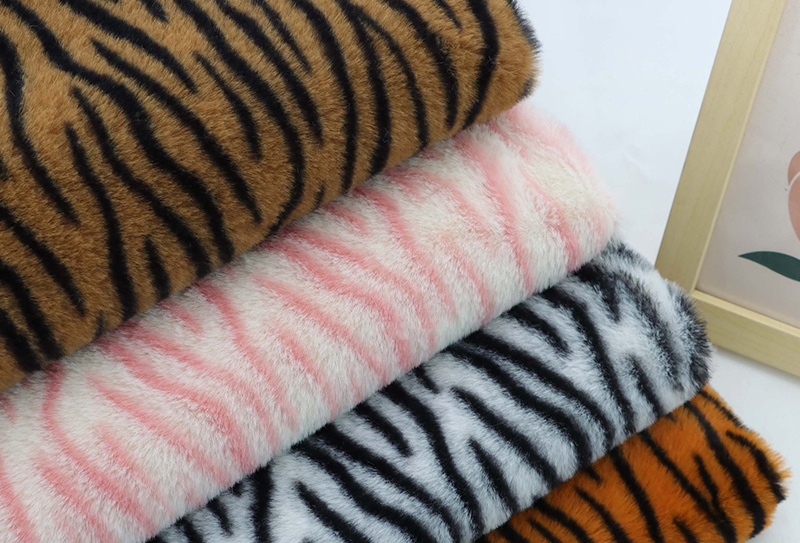
500g/160cm tiger-print rabbit fur print plush fabric uses printing technology to realistically present the wild stripes of tiger stripes on a high-quality imitation rabbit fur base fabric. The medium-...
See Details -
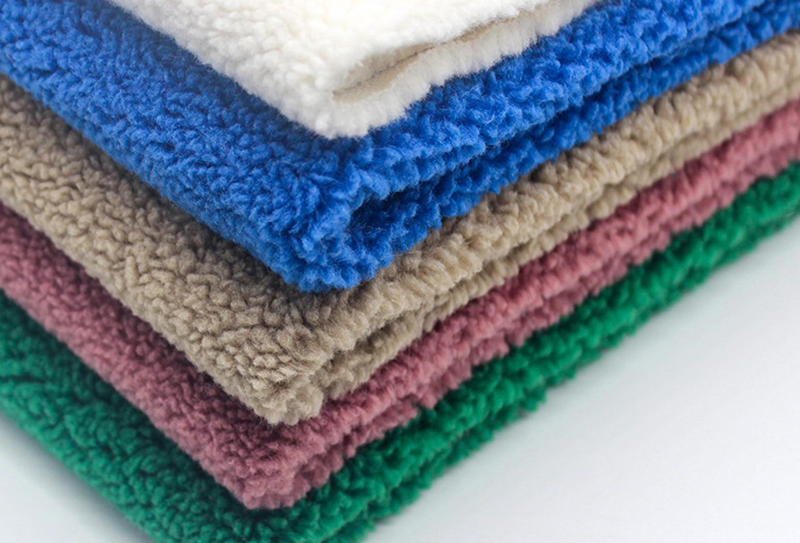
This 750mg*160cm wheat-ear grain plush fabric uses a dyeing process to create a natural, smooth, three-dimensional grain texture resembling wheat ears. The medium-heavy weight of 750g/m2 imparts the f...
See Details -
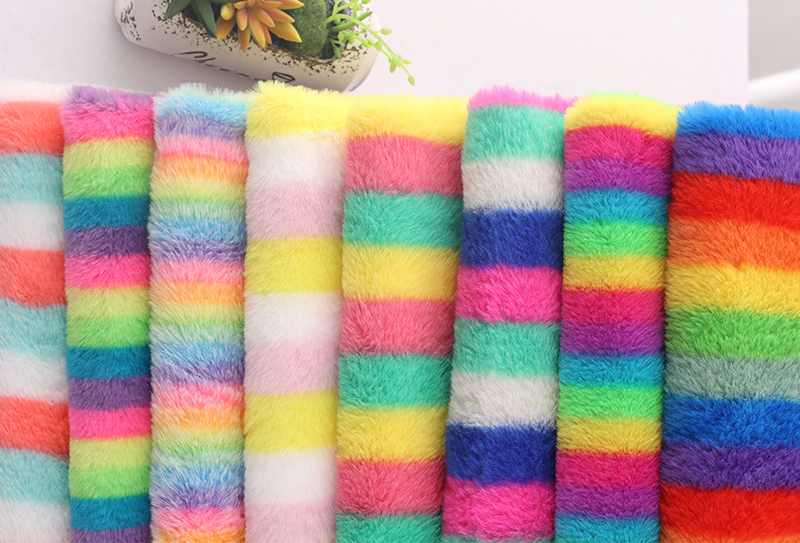
This 500mg*160cm colorful striped rabbit fur print plush fabric features a vibrant, colorful striped pattern on the imitation rabbit fur surface. Its moderate weight of 500g/m2 ensures softness and vo...
See Details -
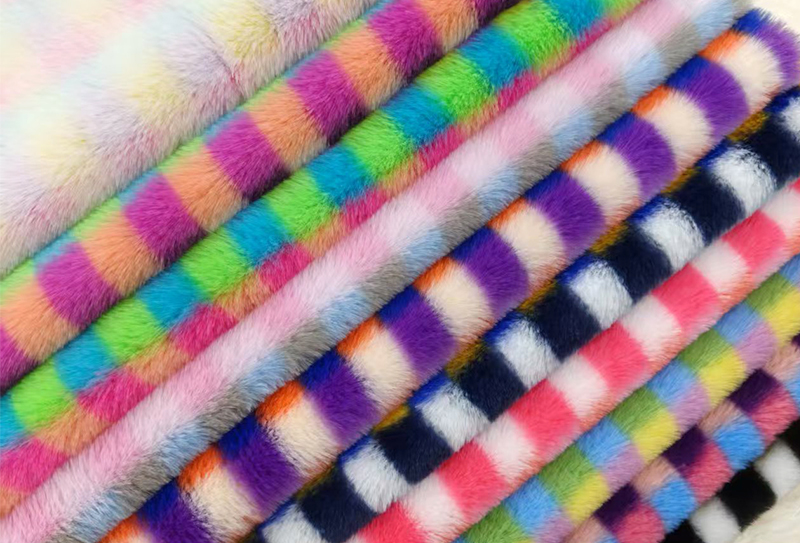
This 500mg*160cm checkered rabbit fur print plush fabric utilizes printing technology to create a clear, rich checkered pattern on the imitation rabbit fur surface. The medium weight of 500g/m ensures...
See Details -
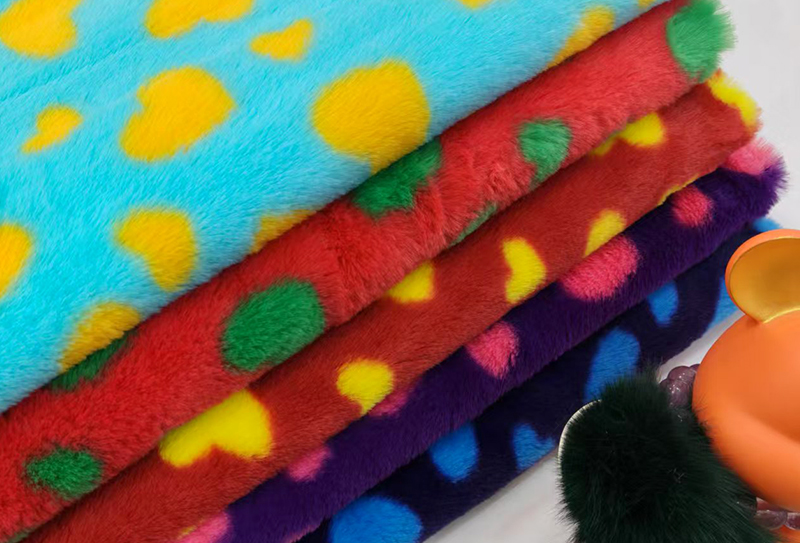
This 500mg x 160cm soft plush fabric with a heart print utilizes a printing process to create a clear, three-dimensional heart pattern on a 280g high-quality plush base fabric. The 500g/m lofty weight...
See Details
Contact us
 1027, Floor 1, Zone 1, Beilian Market, China Textile City, Keqiao District, Shaoxing City, Zhejiang Province, China
 +86-159 8821 9333

Copyright © Shaoxing Wanyi Textile Co., Ltd. All Rights Reserved
Custom Soft Faux Fur Fabric, Sherpa Fleece Material Manufacturers
