
 English
 中文简体
中文简体This 290gsm*165cm Haipai velvet fabric is easy to care for and 30mm thick, making it suitable for clothing, toys, pet beds, blankets, and other decorative applications. Its excellent wear resistance a...
See DetailsShort Plush vs Long Plush Fabric: The Complete Technical Guide
Content
- 1 Defining the Plush Spectrum
- 2 Short Plush Fabric: Technical Profile
- 3 Long Plush Fabric: Technical Profile
- 4 Comparative Analysis: Manufacturing Parameters
- 5 Durability and Lifecycle Performance
- 6 Application-Specific Selection Guide
- 7 Visual Comparison: Pile Structure Illustration
- 8 Cost Analysis and Production Economics
- 9 Maintenance and Consumer Care
- 10 Industry Trends and Market Positioning
- 11 Decision Framework: Which Pile to Choose
- 12 Frequently Asked Questions
- 12.0.1 Q1: What is the exact pile height difference between short and long plush?
- 12.0.2 Q2: Which plush type lasts longer in everyday use?
- 12.0.3 Q3: Can long plush be used for children's toys?
- 12.0.4 Q4: How does printing quality differ between the two?
- 12.0.5 Q5: What are the cost implications of choosing long plush?
- 12.0.6 Q6: Is there a mid-range option between short and long plush?
- 12.0.7 Q7: Which fabric is more environmentally sustainable?
Understanding the distinction between Short Plush Fabric and its long-pile counterpart is essential for designers, manufacturers, and product developers. This comprehensive guide examines every technical aspect, from pile construction and fiber behavior to real-world performance metrics, helping you make informed material selections for your specific applications.
Defining the Plush Spectrum
Plush fabric encompasses a diverse range of textile surfaces, with pile height serving as the primary classification parameter. The fundamental difference between short plush and long plush lies in fiber length, which directly influences tactile response, visual depth, mechanical durability, and manufacturing complexity. Industry standards typically classify short plush as having pile heights under 5mm, while long plush exceeds 10mm, though these boundaries vary across product categories and regional specifications .
The pile height measurement is taken from the base fabric to the fiber tips, representing the distance fibers extend above the backing material. This measurement determines how the fabric interacts with light, how it feels against the skin, and how it behaves under mechanical stress such as compression, friction, and repeated handling .
Short Plush Fabric: Technical Profile
Short plush fabric features a dense, compact pile surface where individual fibers stand vertically at minimal heights. This category includes commercially significant variants such as velboa, which typically measures 1.2mm to 1.5mm in pile height, and microfiber plush ranging from 2mm to 5mm. The short pile structure creates a smooth, uniform surface that feels soft yet firm, with minimal directionality or grain .
Physical Properties
- Pile Height: 1.2mm – 5mm, with velboa at approximately 1.5mm
- Fiber Density: 280 – 350 gsm, with high fiber count per square centimeter
- Fiber Composition: Primarily 100% polyester microfiber, occasionally blended with elastane for stretch applications
- Surface Character: Matte finish with uniform light reflection across the entire surface
- Compression Resistance: High resilience, returning to original pile height after compression
Structural Advantages
The compact nature of short plush provides several engineering benefits. Dense fiber packing reduces fiber migration, minimizing shedding and fiber loss during manufacturing and consumer use. The short pile allows precise definition of printed details, embroidery stitches, and heat-transfer applications, making it the preferred substrate for branded merchandise and character products . Additionally, the uniform surface enables consistent color application and reduces visual distortion common in longer piles .
Long Plush Fabric: Technical Profile
Long plush fabric, often referred to as high-pile or faux fur, features extended fibers that create a dramatic, voluminous surface. Pile lengths in this category typically range from 10mm to over 60mm, with luxury and collector-grade materials frequently exceeding 40mm. The extended fibers create depth and texture, with light interacting differently across the uneven surface to produce rich visual effects and natural movement .
Physical Properties
- Pile Height: 10mm – 60mm+, with specialty variants exceeding 80mm
- Fiber Density: 300 – 450+ gsm, varying by intended realism and application
- Fiber Composition: Modacrylic, acrylic, polyester blends, often with anti-static and flame-retardant additives
- Surface Character: Variable light reflection with visible fiber movement and depth
- Compression Resistance: Moderate, requiring periodic restoration to maintain appearance
Performance Considerations
Long plush offers superior thermal insulation due to the air layer trapped within the extended pile structure. The extended fibers provide exceptional softness and a premium tactile experience that consumers associate with luxury and collectible items. However, longer fibers increase manufacturing complexity, requiring specialized cutting equipment, anti-tangling treatments, and extended finishing cycles to maintain appearance integrity . The extended pile also increases material consumption, directly impacting production costs .
Comparative Analysis: Manufacturing Parameters
The technical differences between short and long plush extend beyond pile height to encompass every stage of production. The following table provides a comprehensive comparison of key manufacturing and performance parameters.
Durability and Lifecycle Performance
Short and long plush fabrics exhibit significantly different performance profiles over their operational lifecycles. These differences influence product warranties, expected service life, and consumer satisfaction metrics .
Short Plush Durability Metrics
Abrasion Resistance: Withstands 10,000 – 15,000 Martindale cycles without visible wear .
Pilling Resistance: Rating of 4 – 5 on the ICI pilling scale after 5,000 rubs .
Colorfastness: Maintains 4+ rating after 20 standard wash cycles .
Compression Recovery: Returns to 95% of original pile height after 24-hour rest .
Long Plush Durability Metrics
Abrasion Resistance: Withstands 3,000 – 5,000 Martindale cycles before visible matting .
Pilling Resistance: Rating of 2 – 3 on the ICI pilling scale after 2,000 rubs .
Colorfastness: Maintains 3 – 4 rating after 5 gentle wash cycles .
Compression Recovery: Returns to 70% – 80% of original pile height after 24-hour rest .
These metrics demonstrate that Short Plush Fabric significantly outperforms long plush in mechanical durability tests, making it the preferred choice for products requiring extended service life and frequent handling .
Application-Specific Selection Guide
The optimal choice between short and long plush depends on application requirements, target market expectations, and production constraints. The following decision matrix provides structured guidance for material selection.
Product Category Recommendations
Mass-Market Toys
Recommended: Short plush. Durable, washable, cost-effective for high-volume production .
Collector Items
Recommended: Long plush. Premium tactile experience, realistic appearance, higher perceived value .
Promotional Products
Recommended: Short plush. Supports detailed printing and embroidery, consistent branding .
Home Decor & Pillows
Recommended: Long plush for accent pieces, short plush for high-use items .
Baby & Children's Products
Recommended: Short plush. Easy cleaning, allergen-friendly, durable for repeated washing .
Costume & Mascot Suits
Recommended: Short plush. Lightweight, breathable, maintains shape during movement .
Visual Comparison: Pile Structure Illustration
Cost Analysis and Production Economics
Material selection significantly impacts production economics across multiple cost categories. Understanding these differences enables accurate budget planning and pricing strategy development .
Raw Material Cost
Short plush: 30% – 50% lower fiber consumption per unit area .
Manufacturing Time
Short plush: 40% faster production due to simpler finishing .
Waste & Scrap
Short plush: Under 5% waste; long plush: 10% – 20% waste .
These economic factors make Short Plush Fabric the cost-effective choice for high-volume production runs, while long plush remains competitive in premium segments where tactile experience justifies higher material and production costs .
Maintenance and Consumer Care
The maintenance requirements for short and long plush differ significantly, affecting consumer satisfaction and product longevity. Short plush fabric generally accommodates standard home laundering, while long plush often requires professional care .
Short Plush Care Protocol
- Machine wash at 30°C – 40°C with mild detergent
- Tumble dry on low heat or air dry flat
- Avoid fabric softeners that may coat fibers
- Brush gently with a soft-bristled brush to restore pile
- Iron on low setting with steam if necessary
Long Plush Care Protocol
- Dry clean recommended for premium items
- Hand wash in cold water with gentle detergent if machine washing
- Never wring or twist; squeeze gently to remove water
- Air dry flat, away from direct sunlight
- Use a pet brush or specialized plush brush to restore fibers
Industry Trends and Market Positioning
Current market analysis reveals distinct positioning for both fabric categories. Short plush dominates the promotional merchandise sector, accounting for approximately 65% of all branded plush items produced globally . Long plush maintains a strong presence in the collector and luxury gift markets, representing over 70% of plush items priced above USD 50 retail .
Emerging trends indicate growing demand for super-soft short plush variants that combine the durability of short pile with enhanced tactile softness through advanced fiber engineering. These innovations are capturing market share from traditional long plush applications, suggesting a convergence of performance characteristics that may redefine category boundaries in coming years .
Decision Framework: Which Pile to Choose
This structured decision framework guides material selection based on project priorities.
Choose Short Plush When:
- Production volume exceeds 10,000 units annually
- Products require frequent cleaning or handling
- Detailed printing, embroidery, or branding is required
- Budget constraints favor cost-effective materials
- Target audience includes children or active users
Choose Long Plush When:
- Products target collector or premium gift markets
- Natural, realistic appearance is essential
- Production runs are limited or made-to-order
- Visual impact and luxury feel justify higher costs
- Products are primarily display-oriented with minimal handling
Frequently Asked Questions
Q1: What is the exact pile height difference between short and long plush?
Short plush fabric typically has a pile height of 1.2mm to 5mm, while long plush measures 10mm to 60mm or more. The specific cutoff varies by manufacturer and application, but the 5mm to 10mm range generally serves as the transition zone between the two categories .
Q2: Which plush type lasts longer in everyday use?
Short plush fabric offers significantly longer service life due to its compact fiber structure. It resists matting, abrasion, and shedding much better than long plush, maintaining its appearance through hundreds of handling cycles and multiple washes .
Q3: Can long plush be used for children's toys?
Long plush can be used for children's toys, but it requires careful design considerations. The extended fibers present higher shedding risks and may trap dirt more easily. For children under three years, short plush is generally recommended due to its durability and ease of cleaning .
Q4: How does printing quality differ between the two?
Short plush provides excellent print definition with sharp edges and clear details, suitable for complex logos and character faces. Long plush produces soft, diffused prints with limited resolution due to the uneven fiber surface, making it unsuitable for detailed graphics .
Q5: What are the cost implications of choosing long plush?
Long plush typically costs 1.5 to 3 times more than short plush of comparable quality. This difference reflects higher fiber consumption, more complex manufacturing processes, increased waste, and additional finishing treatments required to maintain appearance integrity .
Q6: Is there a mid-range option between short and long plush?
Yes, some manufacturers offer medium-pile fabrics measuring 6mm to 9mm, sometimes called medium plush or standard plush. These materials aim to balance durability with a softer tactile experience, though they are less common than the short or long categories .
Q7: Which fabric is more environmentally sustainable?
Hot News
-
-
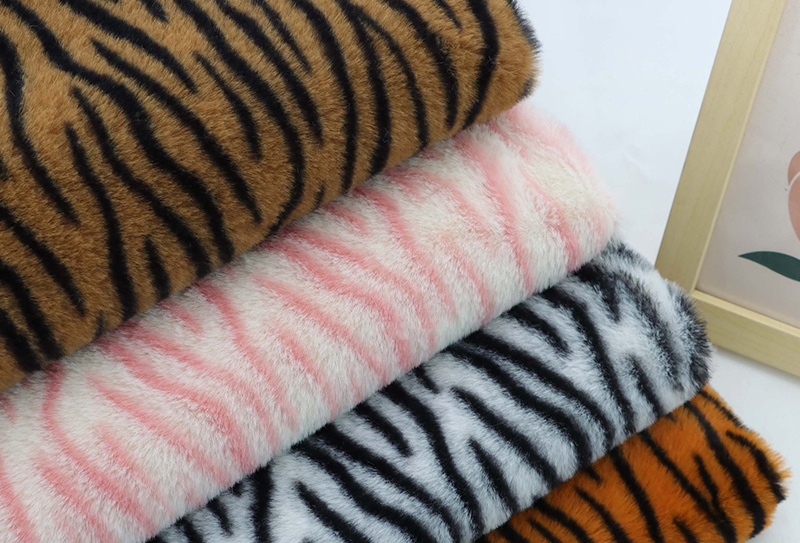
500g/160cm tiger-print rabbit fur print plush fabric uses printing technology to realistically present the wild stripes of tiger stripes on a high-quality imitation rabbit fur base fabric. The medium-...
See Details -
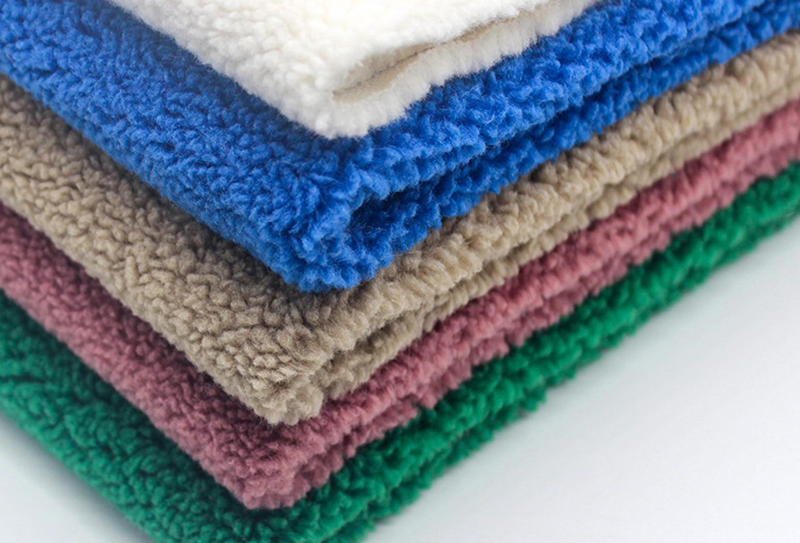
This 750mg*160cm wheat-ear grain plush fabric uses a dyeing process to create a natural, smooth, three-dimensional grain texture resembling wheat ears. The medium-heavy weight of 750g/m2 imparts the f...
See Details -
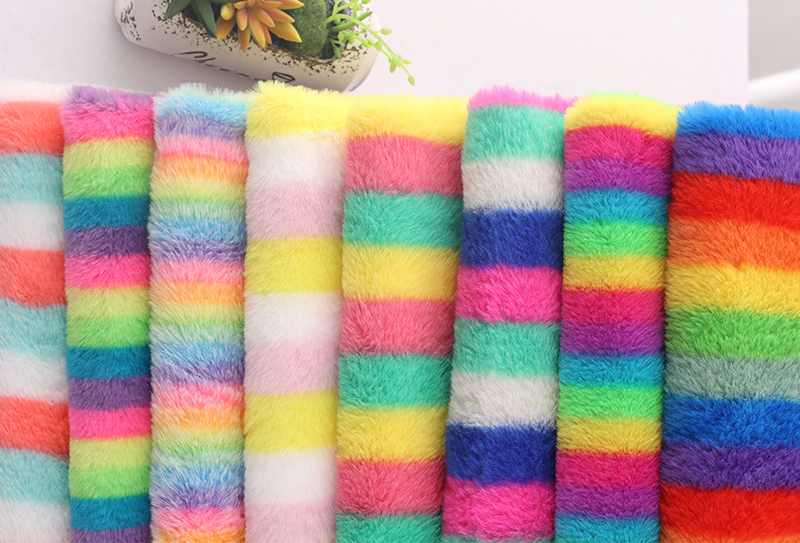
This 500mg*160cm colorful striped rabbit fur print plush fabric features a vibrant, colorful striped pattern on the imitation rabbit fur surface. Its moderate weight of 500g/m2 ensures softness and vo...
See Details -
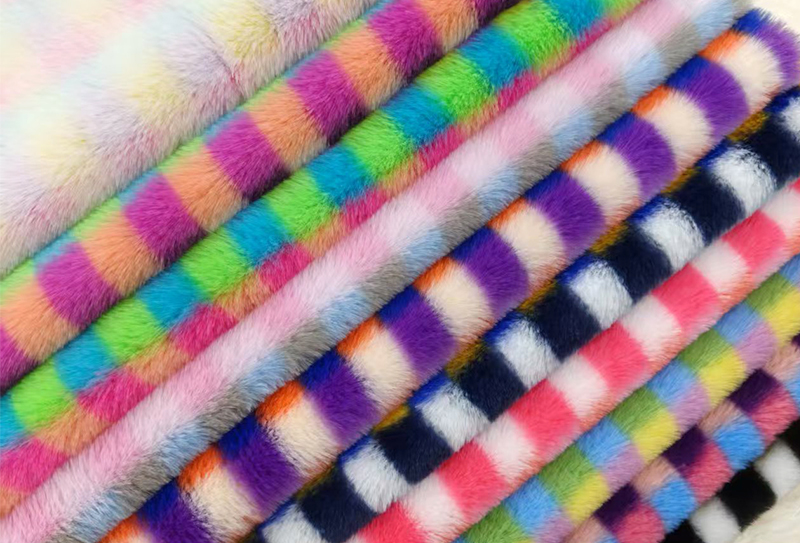
This 500mg*160cm checkered rabbit fur print plush fabric utilizes printing technology to create a clear, rich checkered pattern on the imitation rabbit fur surface. The medium weight of 500g/m ensures...
See Details -
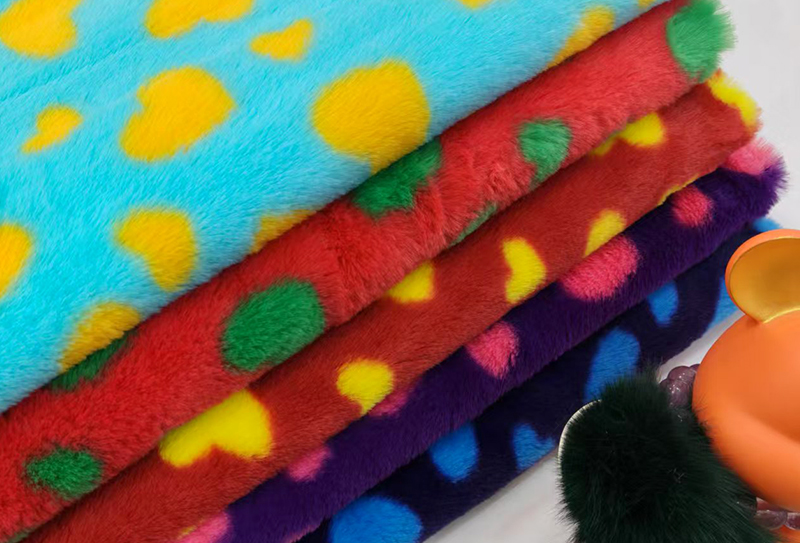
This 500mg x 160cm soft plush fabric with a heart print utilizes a printing process to create a clear, three-dimensional heart pattern on a 280g high-quality plush base fabric. The 500g/m lofty weight...
See Details
Contact us
 1027, Floor 1, Zone 1, Beilian Market, China Textile City, Keqiao District, Shaoxing City, Zhejiang Province, China
 +86-159 8821 9333

Copyright © Shaoxing Wanyi Textile Co., Ltd. All Rights Reserved
Custom Soft Faux Fur Fabric, Sherpa Fleece Material Manufacturers
